
Beginner Guides
How Many Tarot Cards Should You Pull? 1 vs. 3 vs. 5+ Cards
A practical guide to choosing how many tarot cards to pull: 1, 3, 5, or 7+, with examples and the limits of larger spreads.
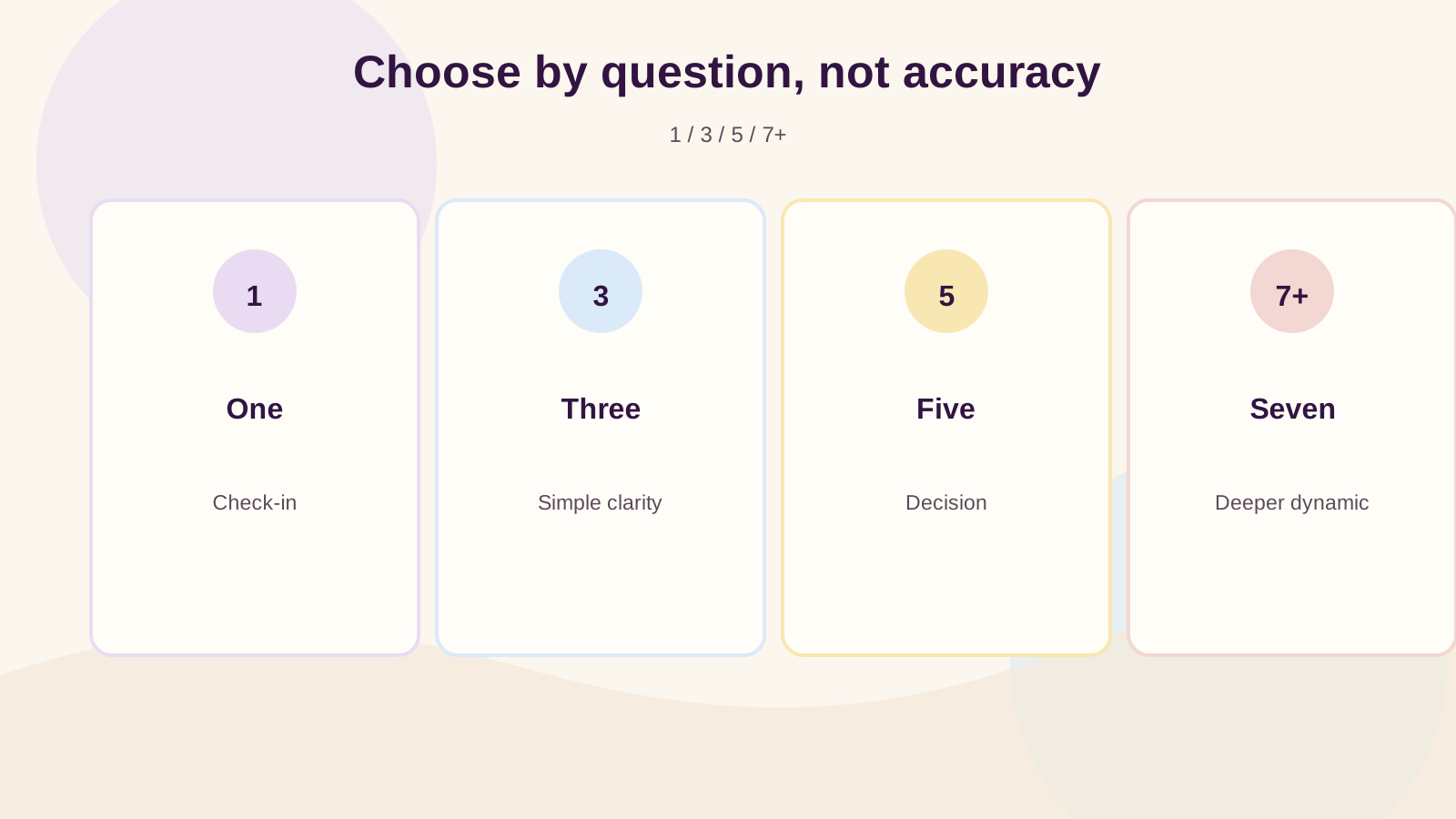
How many tarot cards you pull should match the complexity of the question, not a belief that more cards are more accurate.
One card is enough for a daily check-in. Three cards can clarify a single situation. Five cards help with a real decision. Seven or more can explore a deeper dynamic, but only if you can hold that much context.
This guide gives you a quick way to choose, with examples and a clear warning: larger spreads add more symbols, not more truth.
Quick Guide: How Many Cards?
Use this table as your first decision. The size should follow the question.
1 card
Daily check-in or a single feeling, intention, or observation.
3 cards
Simple clarity about one situation: what is happening, what to notice, what to do.
5 cards
A real decision, a relationship dynamic, or several factors you need to compare.
7+ cards
A deeper pattern or transition, when you have time and context to hold the story.
Examples: 'How do I feel about this job offer?' usually needs one card. 'What are the tradeoffs between two paths?' usually needs five. 'Why do I keep repeating this relationship pattern?' can use five or seven.
When One Card Is Enough
One card is enough when the question is about the present moment: a feeling, a need, or one small intention. It keeps the reading simple enough to act on.
Its weakness is that it cannot hold much context. Use it for daily check-ins, not for comparing options or untangling a long pattern.
A Daily Reading is built around this size.
When Three Cards Work Best
Three cards work best for one clear situation with three layers: what is present, what needs attention, and what you can do.
They give enough structure to stay focused without creating a long list of meanings. If you want the full method, the Three-Card Spread guide covers it in detail.
Match the spread size to the question, then choose the closest Fate Mirror reading.
A guided reading keeps the card count aligned with the level of clarity you actually need.
Browse ReadingsWhen to Use Five Cards
Five cards work best when a decision or relationship dynamic has several moving parts: what you feel, what you observe, what you need, what gets in the way, and what you can choose.
This size adds depth, but it also asks for more attention. If you cannot connect the positions, the extra cards become decoration.
For relationship dynamics, the Relationship Check-in offers a structured version. For decisions, the Crossroads Decision reading compares two paths.
When Seven or More Cards Add Value
Seven or more cards add value when you are exploring a long pattern, a transition, or several themes at once.
The value depends on your ability to keep context. If you lose the thread after the fourth card, the larger spread is not helping.
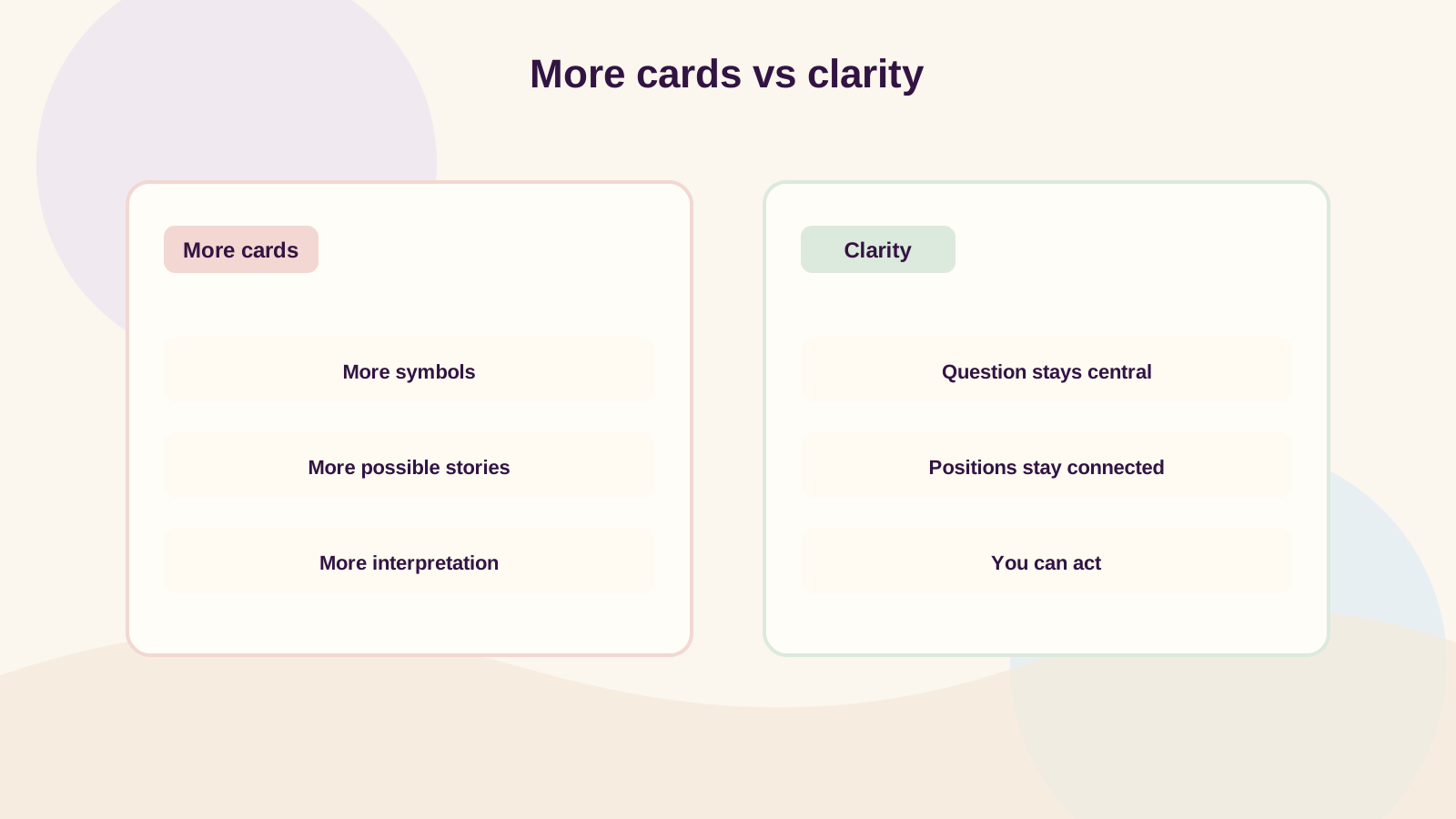
More cards do not mean more accuracy. They mean more symbols, more possible stories, and more room for your own interpretation.
Why More Cards Can Create Noise
Every card adds a new symbol, a new possible meaning, and a new thread to hold. With too many cards, the reading can become a puzzle you solve by choosing the meanings you prefer.
A smaller spread keeps the question central. If a reading feels vague, the fix is usually a clearer question or a smaller spread, not another card.
Tarot cannot verify another person's private thoughts, guarantee a future event, or decide for you. Use the cards to sharpen your observation, assumption, need, boundary, and choice.
Match the spread size to the question, then choose the closest Fate Mirror reading.
A guided reading keeps the card count aligned with the level of clarity you actually need.
Browse ReadingsFAQ
How many cards should a beginner pull?
Start with one or three cards. Smaller spreads give you time to connect the cards without losing context.
Is one card enough?
Yes, for a daily check-in or a single feeling. One card is not enough for comparing options or exploring a long pattern.
Can I pull extra clarification cards?
You can, but only when the first cards point to a specific ambiguity. Repeated clarification cards can turn a clear reading into a longer search for a comfortable answer.
Does more cards mean more accuracy?
No. More cards add more symbols and more possible meanings. Accuracy is not the issue; clarity is. Choose the size that keeps the question usable.
The best spread size is the one that keeps the question readable. Start small, add cards only when the situation asks for it, and remember that clarity matters more than quantity.