
Beginner Guides
How to Ask Better Tarot Questions: 50 Examples for Love, Life and Decisions
A practical guide to designing better tarot questions, with five rules, 50 examples across relationships, decisions, work, boundaries, and daily check-ins, plus rewrites.
A good tarot question is not a demand for certainty. It is a prompt that helps you notice something, choose something, or understand yourself better.
The difference between a vague reading and a useful one often comes down to the question. This guide explains five rules, gives 50 examples, and shows ten rewrites.
The goal is not to make tarot predict more. It is to make the reading reflect something you can actually use.
What Makes a Good Tarot Question?
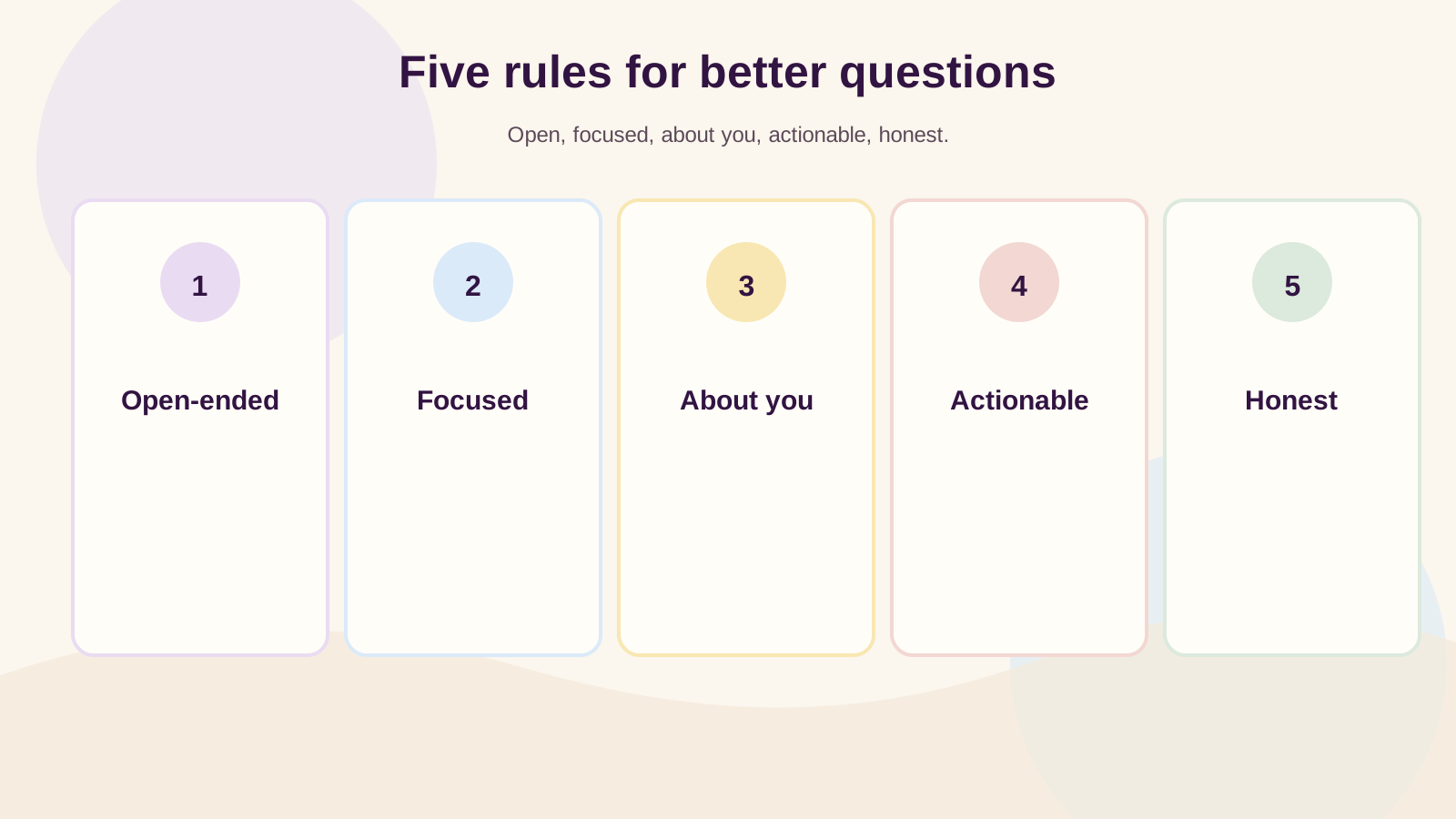
A good tarot question is open, focused, about you, and actionable. It invites reflection instead of demanding a prediction, and it does not pretend the cards can verify someone else's mind or a fixed future.
The best questions usually begin with what, how, or why. They leave room for the cards to show a pattern, a need, or a next step rather than a simple yes or no.
Five Rules for Better Questions
Use these five rules whenever you write a question.
- Open-ended: Start with what, how, or why, not will or should.
- Focused: Ask one question at a time.
- Self-relevant: Keep the question about your observation, need, or choice.
- Actionable: End somewhere you can act.
- Honest about uncertainty: Do not pretend the cards can verify a hidden future.
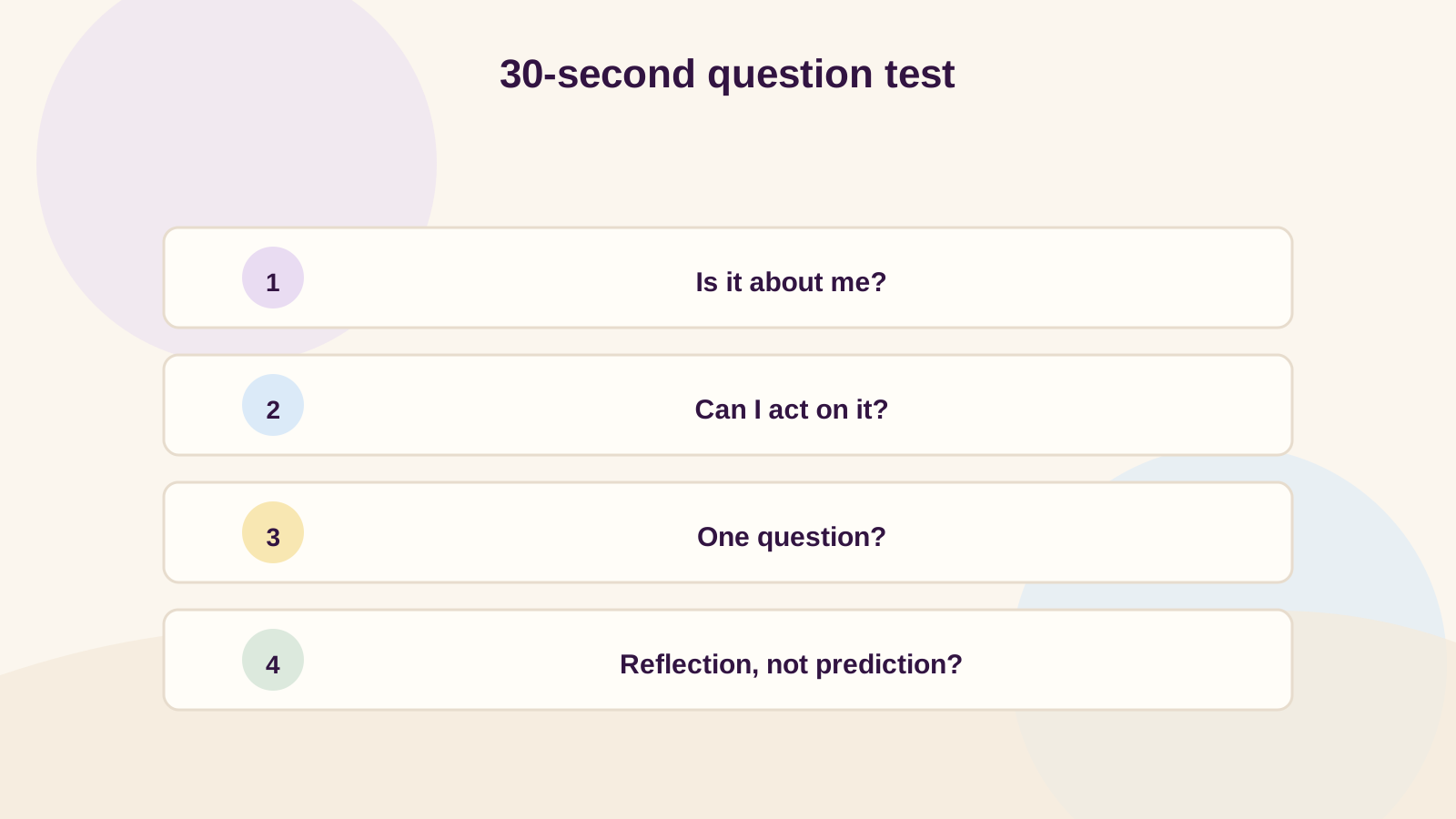
The 30-Second Question Test
Read the question aloud. If it sounds like it could be answered by someone else's choice or a secret future, rewrite it.
Use this four-part checklist before you draw.
Is it about me?
Could I act on the answer?
Is it asking one thing?
Does it invite reflection instead of prediction?
Choose a question that gives you something to notice or decide, then start the matching Fate Mirror reading.
A guided reading keeps the cards focused on your observation, need, boundary, and next step.
Browse ReadingsRelationship Questions
These questions keep a relationship reading on your side of the dynamic. Use them when you want clarity without trying to read someone else's mind.
1
What do I need in this connection right now?
2
What pattern do I keep repeating in relationships?
3
What assumption am I making about how they feel?
4
What would clarity require me to ask or observe?
5
What boundary would protect my peace?
6
What am I hoping this relationship will become?
7
What have I observed that I keep explaining away?
8
What would I choose if I were not afraid of the answer?
9
What is my side of this dynamic?
10
What small honest step could improve communication?
For a guided version, the Relationship Check-in is a good starting point.
Decision Questions
Use these when a choice feels heavy. They separate the fear from the facts and the options from the values.
1
What do I actually want from this decision?
2
What are the costs of each option?
3
What fear is influencing my choice?
4
What information do I still need?
5
What would I choose if neither option felt urgent?
6
What value matters most here?
7
What can I control about this situation?
8
What would a smaller version of this decision look like?
9
What would I advise a close friend?
10
What is one step I can take this week?
For comparing two paths, the Crossroads Decision reading can help.
Self-Reflection Questions
These questions work well with a journal because they ask you to notice your own patterns, not to receive an external verdict.
1
What have I been avoiding?
2
What pattern keeps returning?
3
What do I need to forgive myself for?
4
What am I pretending not to notice?
5
What part of me wants attention?
6
What do I say yes to when I mean no?
7
What do I keep postponing?
8
What belief is holding me back?
9
What does my energy need right now?
10
What would self-trust look like this week?
Write the reflection down in the Journal so you can compare it over time.
Career Questions
Career readings are most useful when they focus on energy, skills, boundaries, and the next experiment instead of a single job offer.
1
What part of my work drains me?
2
What part of my work gives me energy?
3
What skill do I want to grow?
4
What boundary would make work more sustainable?
5
What do I want from the next role, not just the next job?
6
What am I avoiding about this decision?
7
What would support my professional confidence?
8
What is within my control at work?
9
What would I do if I did not need external approval?
10
What small experiment could test a possible direction?
Boundary Questions
Boundary questions keep the focus on what you will do, not what someone else must do.
1
What boundary would protect my time?
2
What am I saying yes to because I am afraid of saying no?
3
What limit has been crossed recently?
4
What would I need to feel respected?
5
What can I communicate without demanding compliance?
Daily Questions
Daily questions should be small enough to answer in one card. They are check-ins, not forecasts.
1
What do I need today?
2
What can I let go of today?
3
What is one small intention I can keep?
4
What feeling deserves attention?
5
What would make today feel more aligned?
A Daily Reading gives you a card and a prompt for this kind of check-in.
Questions to Avoid or Reframe
These ten rewrites show how to turn narrow or predictive questions into something usable.
Will they come back?
Better: What has changed, and what can I choose now?
Do they love me?
Better: What do I observe, assume, and need?
Will I get the job?
Better: How can I prepare, and what can I control?
Is this person the one?
Better: What values and boundaries matter in this connection?
What is my future?
Better: What pattern do I want to continue or change?
Should I stay or leave?
Better: What do I know, fear, and need in this situation?
When will it happen?
Better: What is ready to move, and what still needs time?
What does he think of me?
Better: What am I assuming, and what do I need to ask?
Am I making the right choice?
Better: What information and values can guide my choice?
Will I ever heal?
Better: What kind of care does this part of me need now?
Choose a question that gives you something to notice or decide, then start the matching Fate Mirror reading.
A guided reading keeps the cards focused on your observation, need, boundary, and next step.
Browse ReadingsFAQ
What are good questions to ask tarot?
Good questions are open, focused, about you, and actionable. They ask what, how, or why, and they invite reflection instead of demanding a prediction.
What should you never ask?
Avoid questions that ask the cards to verify another person's private thoughts, guarantee a future event, or decide for you. Reframe them around observation, need, and choice.
Can tarot answer yes or no?
A yes or no question is usually too narrow. It forces a reading into a verdict and ignores the context that makes it useful. Reframe it with what, how, or why.
How specific should a question be?
Specific enough to focus the reading, but open enough to allow a pattern or need to appear. One clear topic and one question is usually enough.
A better question does not guarantee a better outcome. It gives you a better starting point. Choose something you can notice, decide, or do, and let the reading meet you there.