
Relationships
Relationship Tarot Spread for Clarity: 5 Grounded Spreads
Five distinct relationship tarot spreads with card positions, best use, example questions, and a simple way to choose the right one.
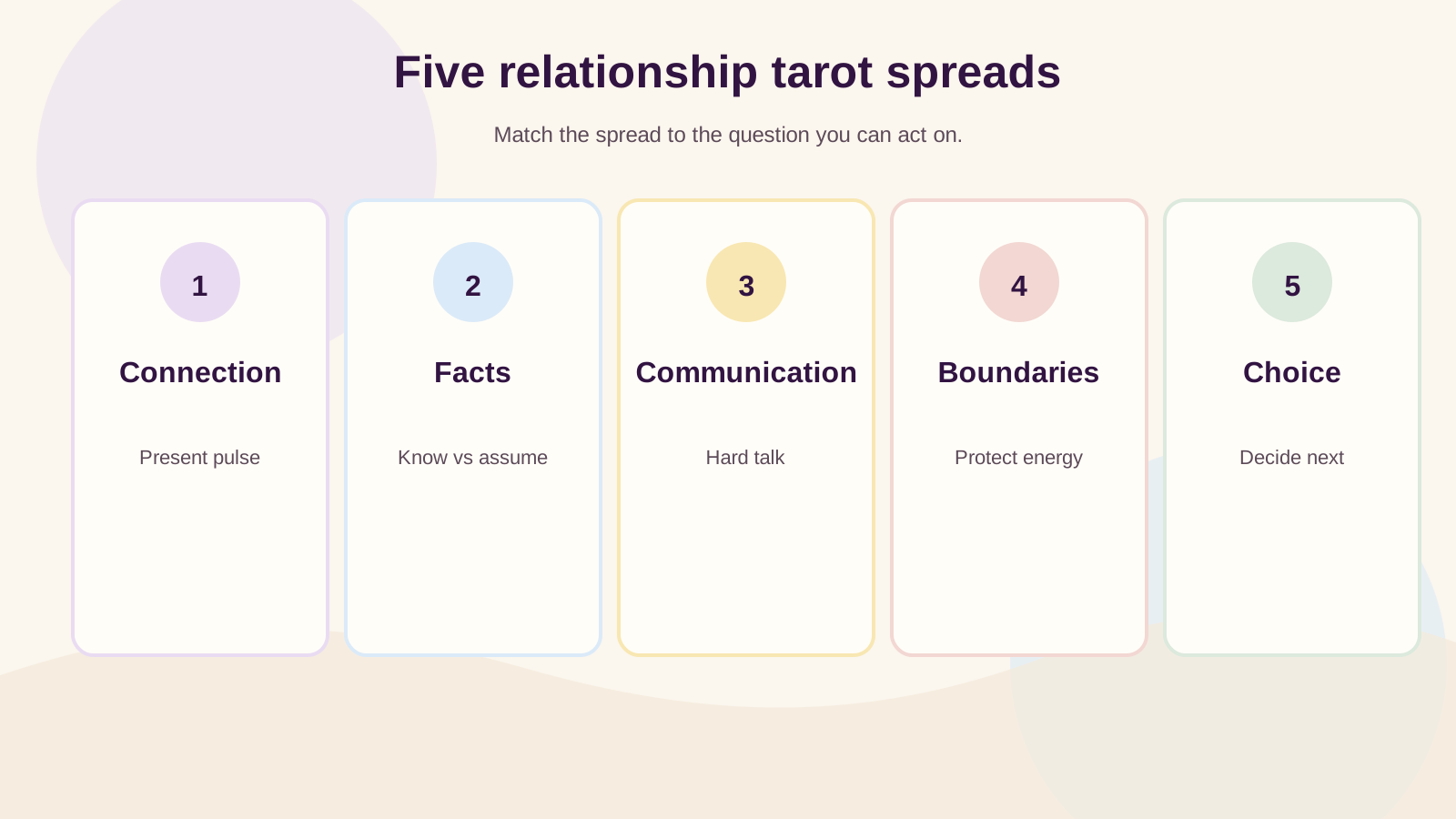
A relationship tarot spread is a set of positions chosen to answer a specific relationship question. The five spreads below are not the same three cards with different names. Each one is built for a different moment: a gentle check-in, a tangle of assumptions, a hard conversation, a boundary, or a decision.
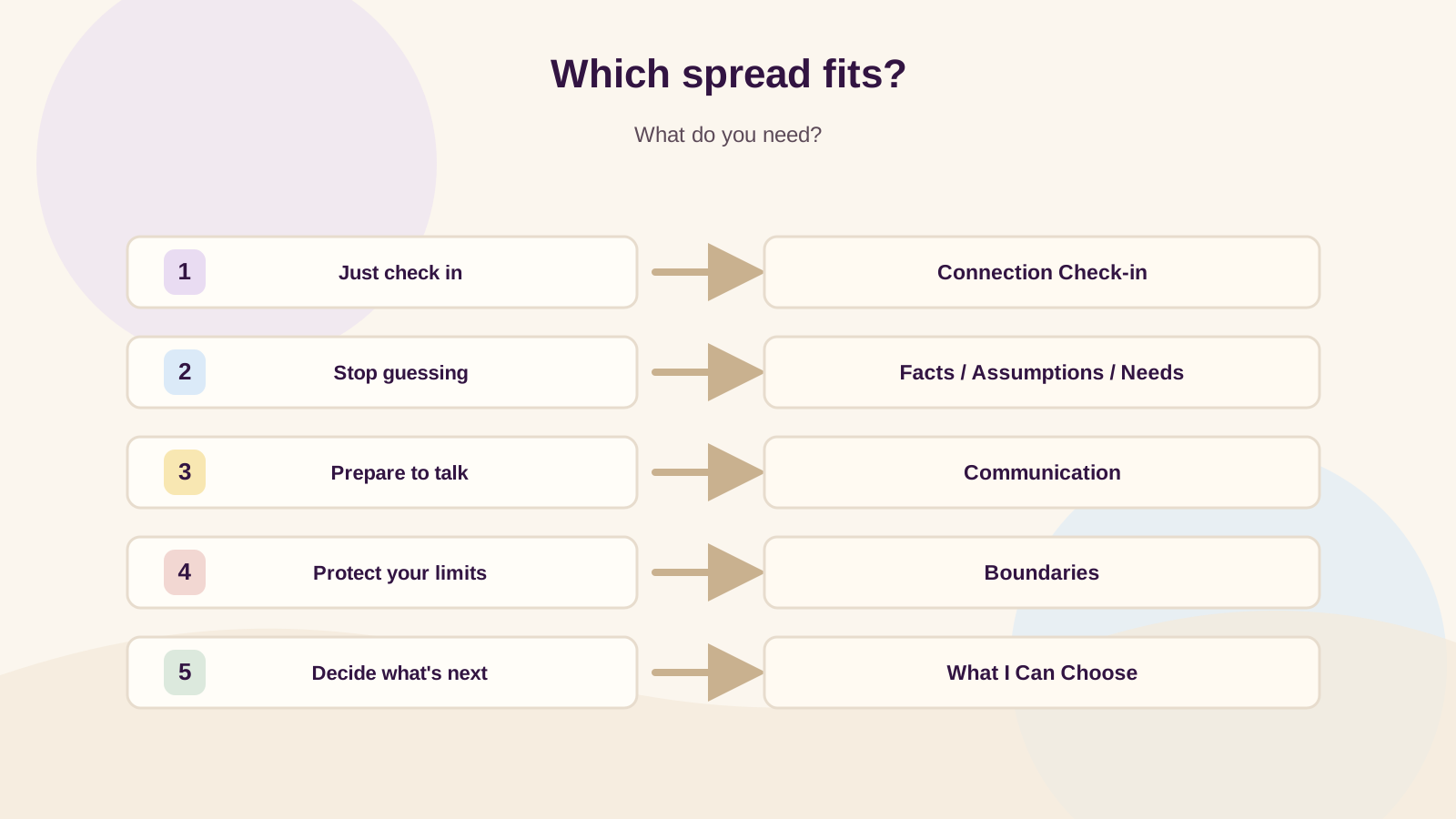
Match the spread to the question you can actually act on. If you only want a present-moment pulse, use the Connection Check-in. If you keep guessing what someone thinks, use Facts / Assumptions / Needs. If a conversation is coming, use Communication. If you feel drained, use Boundaries. If you are deciding what to do next, use What I Can Choose.
None of these spreads can verify another person's private thoughts, guarantee what will happen, or decide for you. They are tools for sorting your own experience.
How to Choose a Relationship Tarot Spread
Choose the spread by asking what kind of clarity you need, not by how many cards feel impressive. This table makes the first decision quick.
Connection Check-in
Use when nothing is wrong and you want a present-moment pulse of the relationship. Four cards.
Facts / Assumptions / Needs
Use when you keep guessing what someone thinks or feels. Three cards.
Communication
Use before a difficult conversation or after one that left things unfinished. Four cards.
Boundaries
Use when you feel drained, overextended, or unsure where your limit is. Four cards.
What I Can Choose
Use when you are deciding what to do next instead of waiting for an answer. Four cards.
If the question is about someone else's private feelings, no spread can verify them. Move from mind-reading to what you observe, assume, need, and choose.
Spread 1: Connection Check-in
Use this when nothing is wrong and you simply want a present-moment pulse of the relationship. It is not a forecast; it is a temperature check.
Example question: What does this connection feel like today?
1. What is present
The emotional energy you can name in the connection right now.
2. What is working
A strength or source of ease you can appreciate.
3. What needs attention
A soft spot worth naming without turning it into a crisis.
4. My next small step
One action within your control.
For a guided version of this kind of check-in, the Relationship Check-in reading keeps the focus on your present experience.
Spread 2: Facts / Assumptions / Needs
Use this when you keep guessing what someone thinks or feels. This spread keeps the reading on your side of the relationship.
Example question: What am I treating as a fact that is really an assumption?
1. Fact
An observable behavior or direct statement.
2. Assumption
The story you are adding, labeled as a story.
3. Need
What would make you feel respected and steady.
This is the best spread for relationship uncertainty. If the situation also has no clear label, Situationship Clarity can support the same work.
Choose the spread that matches your actual question, or start a guided Fate Mirror relationship reading.
A guided reading keeps the cards focused on your observation, assumption, need, and choice.
Browse Relationship ReadingsSpread 3: Communication
Use this before a hard conversation or after one that left things unfinished.
Example question: What would make this conversation clearer?
1. What was said
The words or actions you remember clearly.
2. What I felt
Your emotional response, without assigning blame.
3. What needs saying
The truth that wants clearer language.
4. What I can ask
A direct, respectful question.
For a structured version, the Communication & Boundaries reading helps you name what needs to be said and what deserves protection.
Spread 4: Boundaries
Use this when you feel drained, overextended, or unsure where your limit is.
Example question: What boundary would help me stay connected to myself?
1. What is costing me
The pattern or behavior that takes more than it gives.
2. What I value
The need or principle worth protecting.
3. Where my line is
The specific limit you are starting to name.
4. What I can communicate
A boundary in clear, non-punishing language.
Boundaries are not verdicts on the other person. They are a way of naming how you will care for your own time, energy, and values. The Communication & Boundaries reading can help you practice the words.
Spread 5: What I Can Choose
Use this when you are waiting for someone else to decide, or when you are deciding whether to stay, step back, ask for more, or change the pattern.
Example question: What choice is mine to make right now?
1. What I am deciding
The choice in front of you, named without shame.
2. What I know
Observable information you can rely on.
3. What I fear
The fear that may be steering the decision.
4. What I can choose
One option within your control.
The cards can clarify your options, but the decision belongs to you. For another grounded path, see the Relationship Check-in or Situationship Clarity.
Choose the spread that matches your actual question, or start a guided Fate Mirror relationship reading.
A guided reading keeps the cards focused on your observation, assumption, need, and choice.
Browse Relationship ReadingsFAQ
How many cards for a relationship reading?
Three or four in these spreads. The number matters less than the positions and the question.
Can I read for another person's feelings?
You can reflect on your experience, but the cards cannot verify someone else's private thoughts or feelings.
Which spread is best for uncertainty?
Facts / Assumptions / Needs. It keeps the uncertainty labeled and moves toward what you actually need.
Can couples use tarot together?
Yes, if both people want to. Use Communication or Connection Check-in, keep the reading about shared observations, and do not use cards as a verdict on who is right.
A good relationship spread does not tell you what another person is thinking. It gives your own observation, assumption, need, boundary, and choice a place to sit. Start with the question, then choose the spread that fits it.