
Beginner Guides
How Often Should You Read Tarot? Daily Pulls vs. Full Readings
A practical guide to tarot reading frequency: daily check-ins, weekly reviews, decision readings, and signs that you may need a pause.
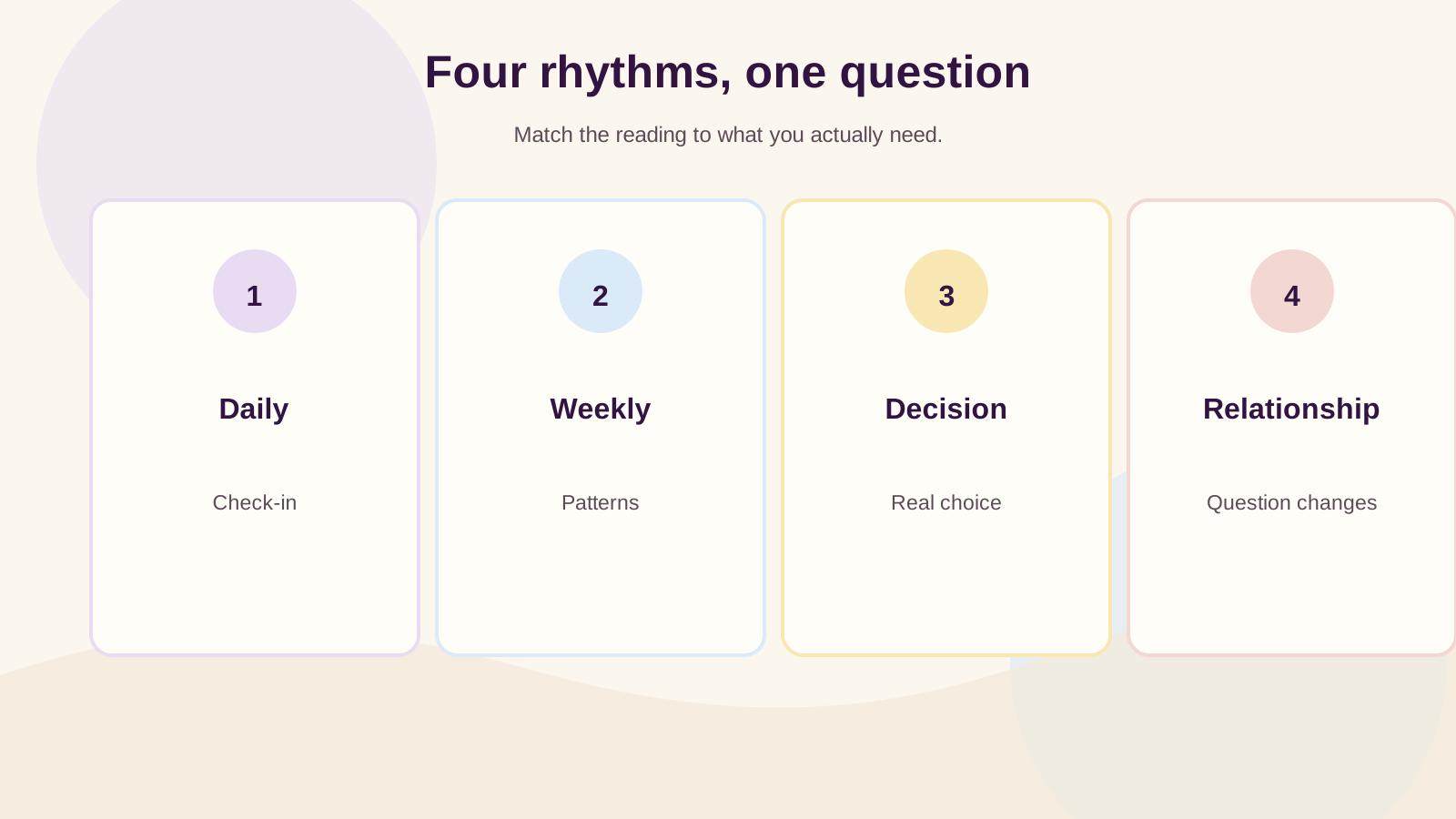
There is no universally correct tarot reading frequency. The right rhythm depends on what you need: daily one-card pulls work for check-ins, weekly reviews reveal patterns, and full readings earn their place when a real question or decision appears.
If a reading helps you notice something, act on it, or feel steadier, the frequency is working. If it keeps you anxious or circling the same question, fewer readings will help more.
This guide compares daily pulls with full readings and gives you a simple way to decide when to read again.
Is There a Right Tarot Reading Frequency?
No. There is no fixed number that works for everyone. Frequency should follow the question, whether anything has changed, and whether the reading still creates clarity.
Daily cards suit small self-check-ins. Weekly reviews suit patterns. Full readings suit real decisions. The problem is not how often you read; it is repeating the same reading when nothing has changed.
Daily check-in
One card for a present-moment note. Best when the pull stays small and reflective.
Weekly review
Compare saved entries once a week. Best for spotting patterns across cards and feelings.
Major decision
A full reading when a real choice is in front of you. Best when you can act on the answer.
Relationship uncertainty
Read when the question changes. Repeating the same relationship question usually creates noise, not clarity.
Daily Pulls
Daily pulls are fine when they stay small. One card, one feeling, and one intention take five minutes and work as a check-in, not a forecast.
The risk is treating the daily card as a weather report. If you can read it as a prompt for your own awareness, the habit can feel quiet and useful.
A Daily Reading gives you a card and a question you can carry through the day.
Weekly Reflection
Weekly reflection is often more useful than daily interpretation of every card. Seven short entries show a pattern; one card usually does not.
Open the week's notes and compare repeated cards, recurring feelings, and intentions you actually kept. Save the reflections in the Journal so the pattern has somewhere to live.
For a broader view, Weekly Mirror can help you compare recurring cards and themes in context.
Use daily cards for check-ins and saved history for patterns, rather than repeating full readings for reassurance.
Save the question, cards, and first reaction, then compare entries when a pattern becomes visible.
Explore the JournalReadings for Decisions
Full readings are for real decisions, not routine maintenance. Use them when a choice is in front of you, when you need to sort competing priorities, or when you can act on what you learn.
The cards will not decide for you. They can clarify what you know, fear, and need, and that is what makes the reading useful.
When You're Asking About the Same Relationship
Asking about the same relationship every day usually produces noise, not clarity. The cards can reflect your changing emotions, but they cannot verify the other person's mind or predict what they will do.
If the question keeps returning, write it down. Compare the wording, your assumptions, and what you observed, then ask whether you need a conversation instead of another reading.
Tarot cannot verify another person's private thoughts, guarantee a future event, or decide for you. Use it to sharpen your own observation, assumption, need, boundary, and choice.
For more on this, see how to track tarot patterns.
Signs You're Reading Too Often
You may need a pause if the reading starts to feel heavier than the insight.
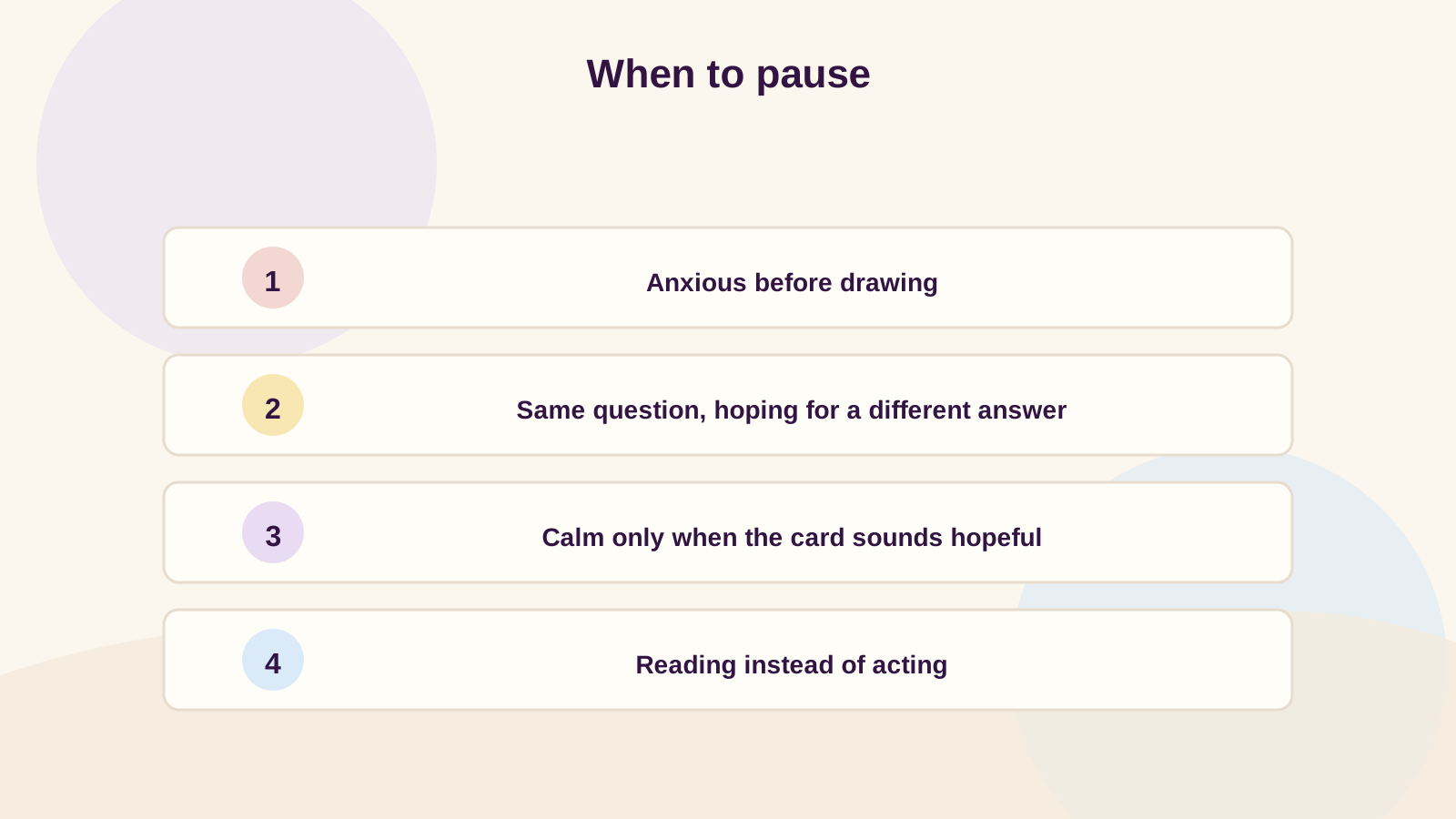
- You feel anxious before you draw.
- You ask the same question and wait for a different answer.
- You only feel calm when the card sounds hopeful.
- You keep reading instead of acting, talking, or resting.
A pause is not a failure. It protects the practice from becoming reassurance-seeking. When you return, start from the original notes, not from the urge to draw again.
Use daily cards for check-ins and saved history for patterns, rather than repeating full readings for reassurance.
Save the question, cards, and first reaction, then compare entries when a pattern becomes visible.
Explore the JournalFAQ
Is daily tarot too much?
Not if the pull stays a small check-in. It becomes too much when it creates anxiety or replaces action with repeated readings.
How long should I wait between readings?
Wait until something changes or a new question appears. A fixed number of days matters less than whether the reading still has something new to offer.
Can I read about the same question every day?
Usually not. Repeating the same question tends to create noise and reassurance-seeking. Journal the original reading and return to it instead.
Is one card a day okay?
Yes. One card with one feeling and one intention is enough for a daily check-in. Keep the note short and review the week for patterns.
Frequency is not a test of dedication. A useful practice is one you can keep without dread: small enough to repeat, honest enough to review, and grounded enough to act on.