
Beginner Guides
How to Track Patterns in Your Tarot Readings Over Time
A practical method for tracking tarot patterns across readings, including seven signals, a tracking table, and a monthly review workflow.
A tarot pattern is a recurring card, symbol, question, emotion, or theme visible across multiple readings. It is not one dramatic pull. It is a signal that appears often enough, in a similar enough context, to be worth noticing.
The value is not in counting how often something repeats. It is in comparing the question, situation, emotion, and action around each appearance.
This guide covers seven signals worth tracking, a simple table, and a monthly review workflow.
What Is a Tarot Pattern?
A tarot pattern is a recurring card, symbol, question, emotion, or theme visible across multiple readings. It becomes useful when the same signal appears in a similar context more than once or twice.
Patterns are observations, not predictions. A recurring suit does not tell you what will happen; it tells you what keeps asking for attention.
Seven Things Worth Tracking
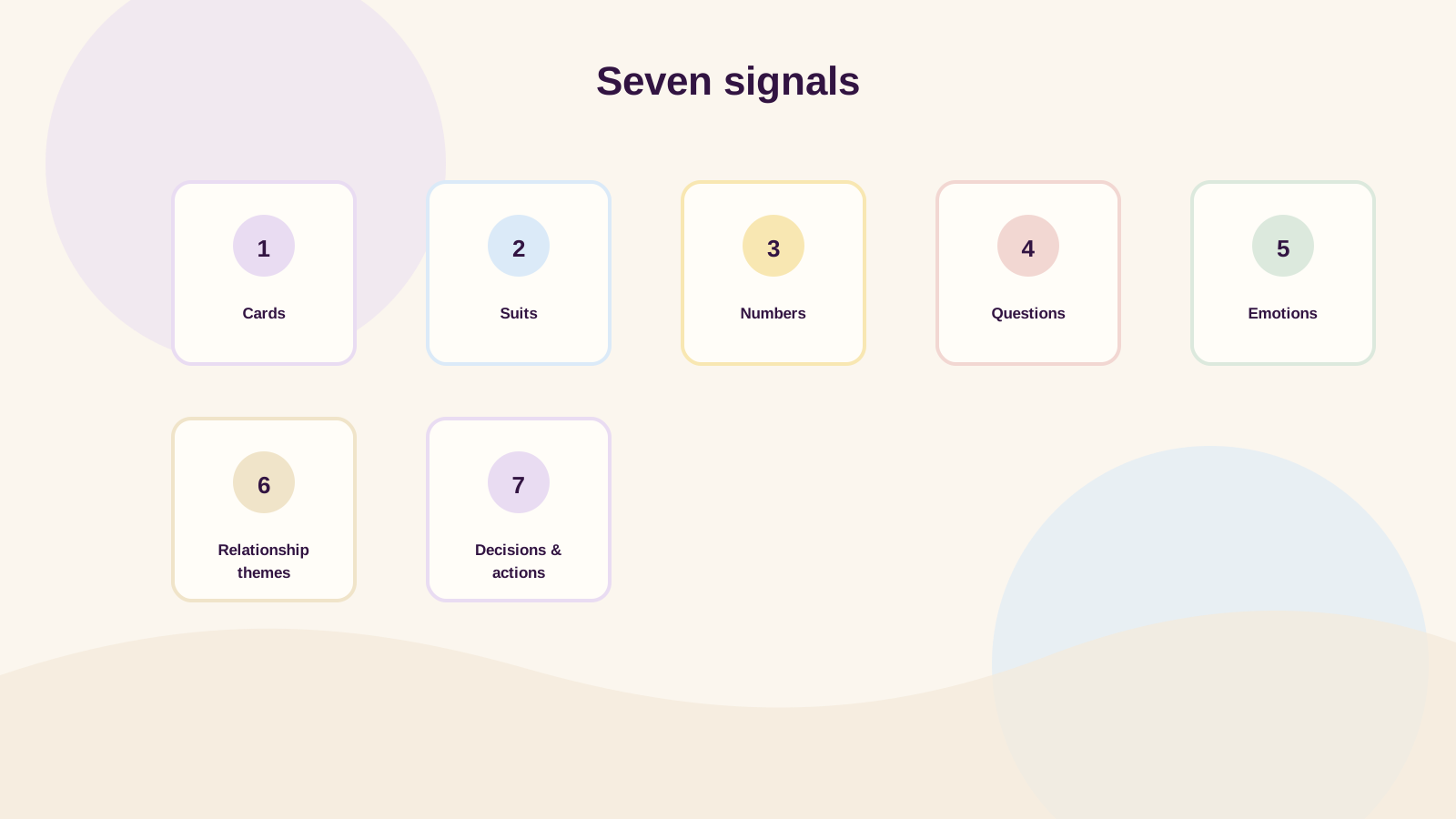
These seven signals cover the most useful types of tarot patterns. You do not need to track all seven; start with two or three that feel relevant to your questions.
1. Repeated cards
The same card appears in similar contexts. See repeating tarot cards for how to read this without turning repetition into fate.
2. Recurring suits
Cups, Wands, Swords, or Pentacles keep showing up across different cards, pointing to a shared emotional or practical theme.
3. Repeating numbers
Aces, Twos, Threes, or another number recurs and suggests a similar stage of movement, such as a beginning, a tension, or a completion.
4. Recurring questions
The same underlying question keeps returning in different wording.
5. Recurring emotions
The same feeling appears even when the topic changes.
6. Relationship themes
Connection, distance, boundaries, or communication keep showing up as a theme.
7. Decisions and actions
The same choice, next step, or avoided action repeats across readings.
How Much Data Do You Need Before Calling Something a Pattern?
Usually several readings over a few weeks, not one repeat. A single repeat is a coincidence; a pattern becomes visible when the same signal returns in a similar context.
A useful benchmark is three to five appearances across at least two weeks, with the same question or emotional tone. Frequency alone is not enough. Context is what makes it a pattern.
Use Fate Mirror Weekly Mirror to compare recurring cards and themes in context.
Weekly Mirror reviews saved readings and repeated patterns without turning frequency into a prediction.
Explore Weekly MirrorA Simple Tracking Table
Track the signal, the context, and the action, not just the card count.
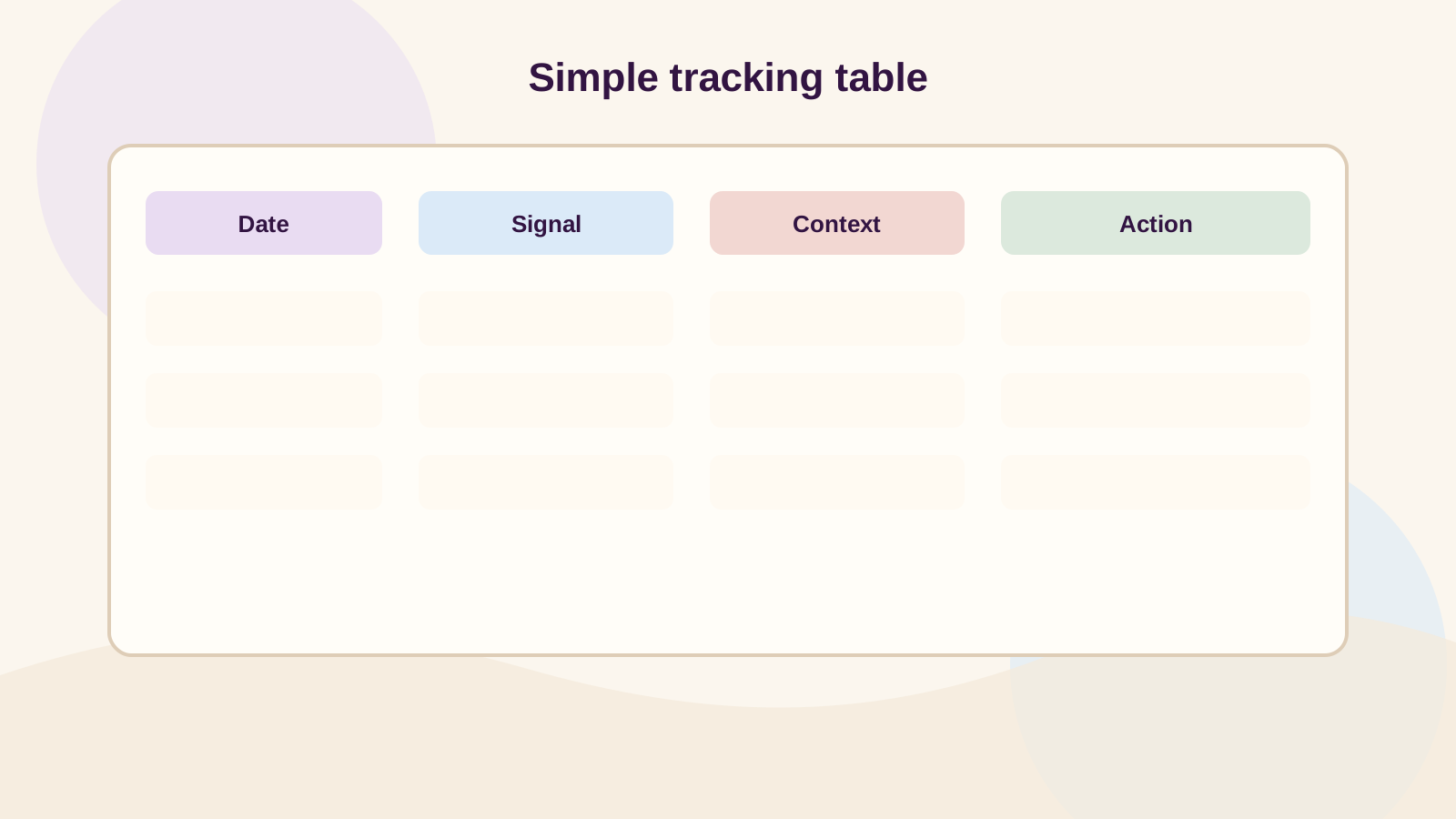
Date
When the reading happened.
Signal
The repeated card, suit, number, question, emotion, or theme.
Context
One line about the situation.
Action
What you did or decided afterward.
For card repetition specifically, see repeating tarot cards.
Monthly Review Workflow
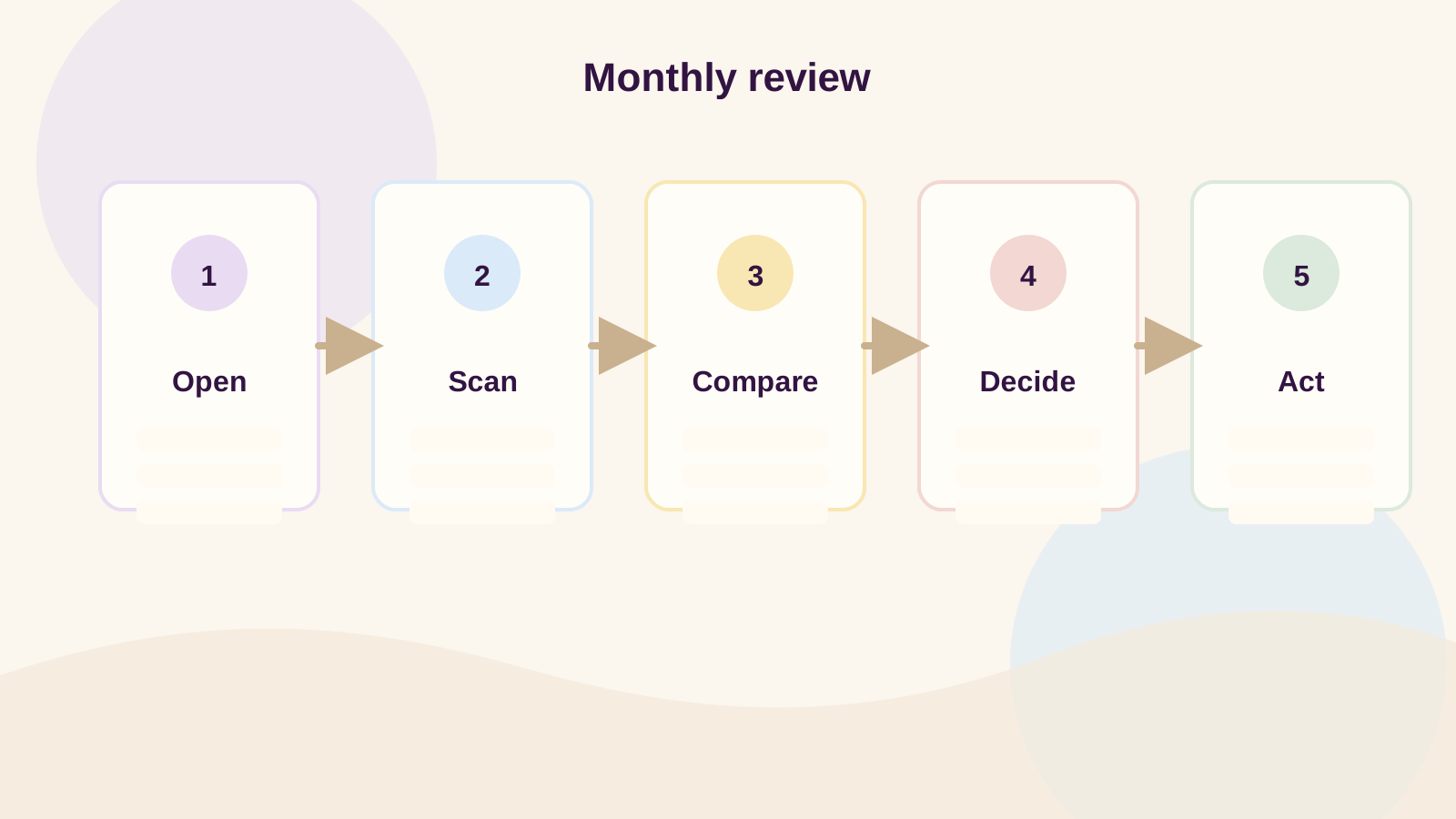
Set aside 15 to 20 minutes once a month. Open saved entries, scan for the seven signals, compare context, then decide whether the pattern needs action.
1
Open
Open the last month of journal entries without reading today's notes first.
2
Scan
Look for repeated cards, suits, numbers, questions, emotions, themes, and actions.
3
Compare
For each signal, write the context around each appearance.
4
Decide
Ask whether the pattern points to an observation, an assumption, a need, a boundary, or a choice.
5
Act
Choose one small next step, or decide the pattern is not significant yet.
For a broader framework, see why your tarot reading history matters. Weekly Mirror is available with Premium; see Fate Mirror pricing.
Example
Here is a month of readings where the pattern is not about one card.
June 3: Queen of Cups
Question: Why do I keep saying yes when I am tired?
Context: Friend asked for a favor.
Emotion: Guilty, drained.
Action: Agreed anyway.

June 10: Page of Cups
Question: What do I need before the weekend?
Context: Same friend asked again.
Emotion: Irritated, then guilty.
Action: Said yes but shortened the time.

June 17: Ace of Cups
Question: What am I avoiding?
Context: Noticed the pattern was about care, not the requests.
Emotion: Clearer.
Action: Named the boundary before agreeing.
The cups appear three times, but the pattern is the question: 'Am I allowed to set a boundary around care?' The suits help, but the recurring question and action matter more.
For recurring suits, see repeating tarot suits.
Use Fate Mirror Weekly Mirror to compare recurring cards and themes in context.
Weekly Mirror reviews saved readings and repeated patterns without turning frequency into a prediction.
Explore Weekly MirrorFAQ
How many readings make a pattern?
Usually several readings over a few weeks with similar context. One repeat is a coincidence; context makes repetition meaningful.
Should I track every card?
No. Track the signals that keep showing up and the questions you keep asking. A useful journal is selective, not exhaustive.
What patterns matter most?
The ones connected to a recurring question, assumption, emotion, or action. A repeated card matters less than what changes around it.
Can repeated questions create false patterns?
Yes. If you ask the same question many times, the same card may appear because the question is unchanged, not because a theme is emerging. Compare context before calling it a pattern.