
Beginner Guides
Repeating Tarot Cards: Why the Same Card Keeps Showing Up
A grounded guide to recurring tarot cards: compare question, situation, emotion, and action instead of treating repetition as fate.
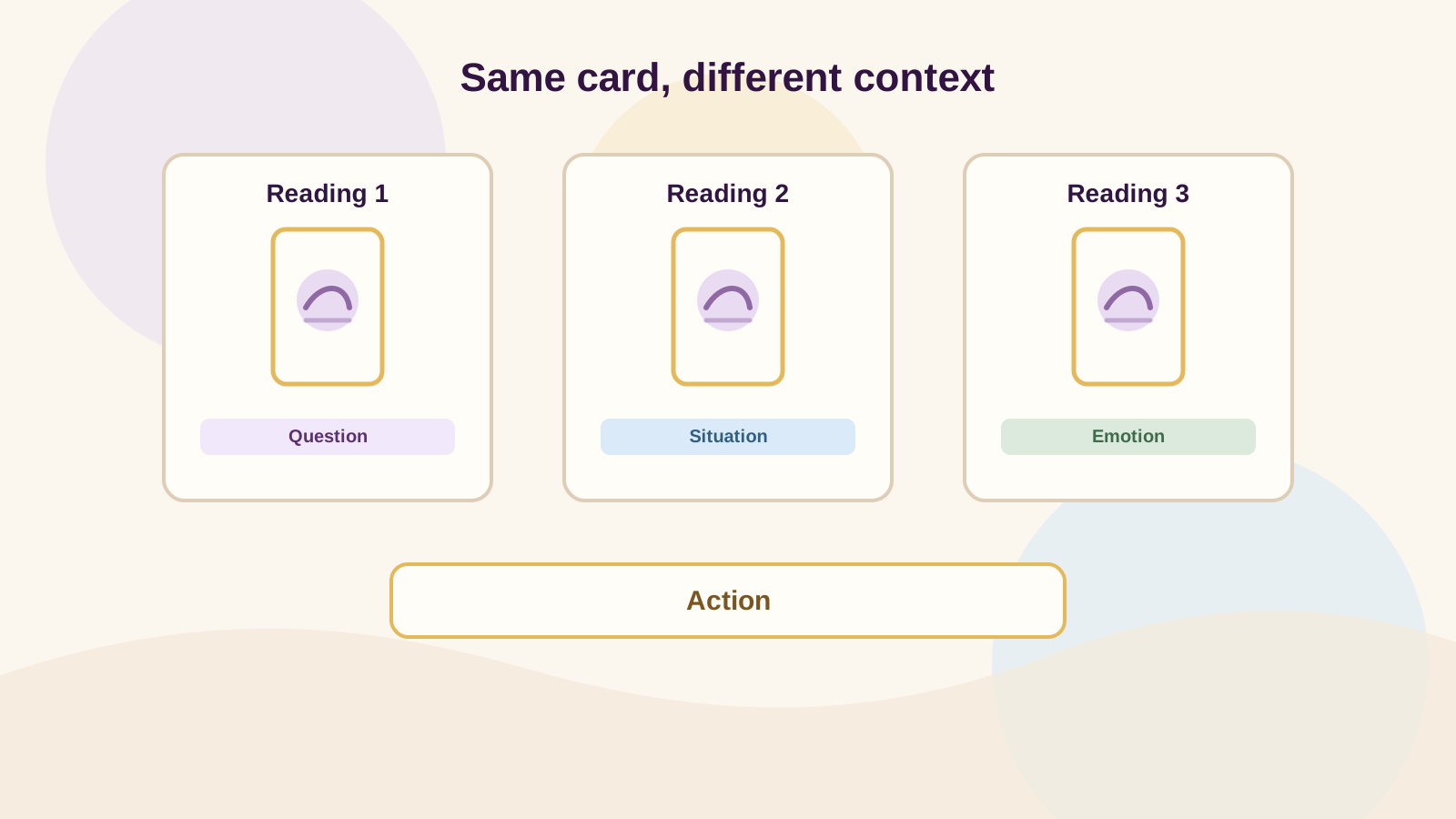
A repeating tarot card is not a hidden message that demands obedience. It is a prompt to compare context. The same card can appear three times for three different reasons, and the meaning comes from the question, situation, emotion, and action around each appearance.
Before assuming the universe is trying to tell you something, rule out the ordinary explanations: a recurring question, a familiar emotional pattern, an unresolved choice, or simple coincidence.
This guide explains those four explanations, how to track a recurring card, and when to stop asking the same question.
What Does a Repeating Tarot Card Mean?
It means something is worth comparing, not that the card is fate. The meaning comes from what changes or stays the same across appearances: the question, the situation, the emotion, and the action.
A repeated card without context is just a repeated image. With context, it can point to a recurring question, an unresolved choice, or an emotional pattern that keeps showing up.
Four Reasons the Same Card May Keep Appearing
These four explanations cover most repeating-card experiences. They are not exhaustive, but they are a good place to start before looking for a mystical meaning.
1. Recurring question
You keep asking the same question in different words. Example: two readings about 'Will they come back?' and one about 'Why do I keep waiting?' may all show the same card because the underlying question has not changed.
2. Emotional pattern
The same feeling keeps returning even when the topic changes. Example: Three of Swords appears in a work reading and a friendship reading because grief or hurt is active in both.
3. Unresolved choice
A decision keeps getting postponed, so the card keeps describing the same fork in the road. Example: The Chariot appears while you keep delaying a job decision.
4. Frequency bias / coincidence
Random decks repeat cards more often than we expect, and we notice repetition more than we notice variety. Example: any card has a chance of repeating; a few repeats do not prove a message.
How to Track a Recurring Card
Record four things each time the card appears: Question, Situation, Emotion, Action. Compare these across appearances before interpreting the card again.
Do not look up the card's meaning first. Write your first reaction, then compare.
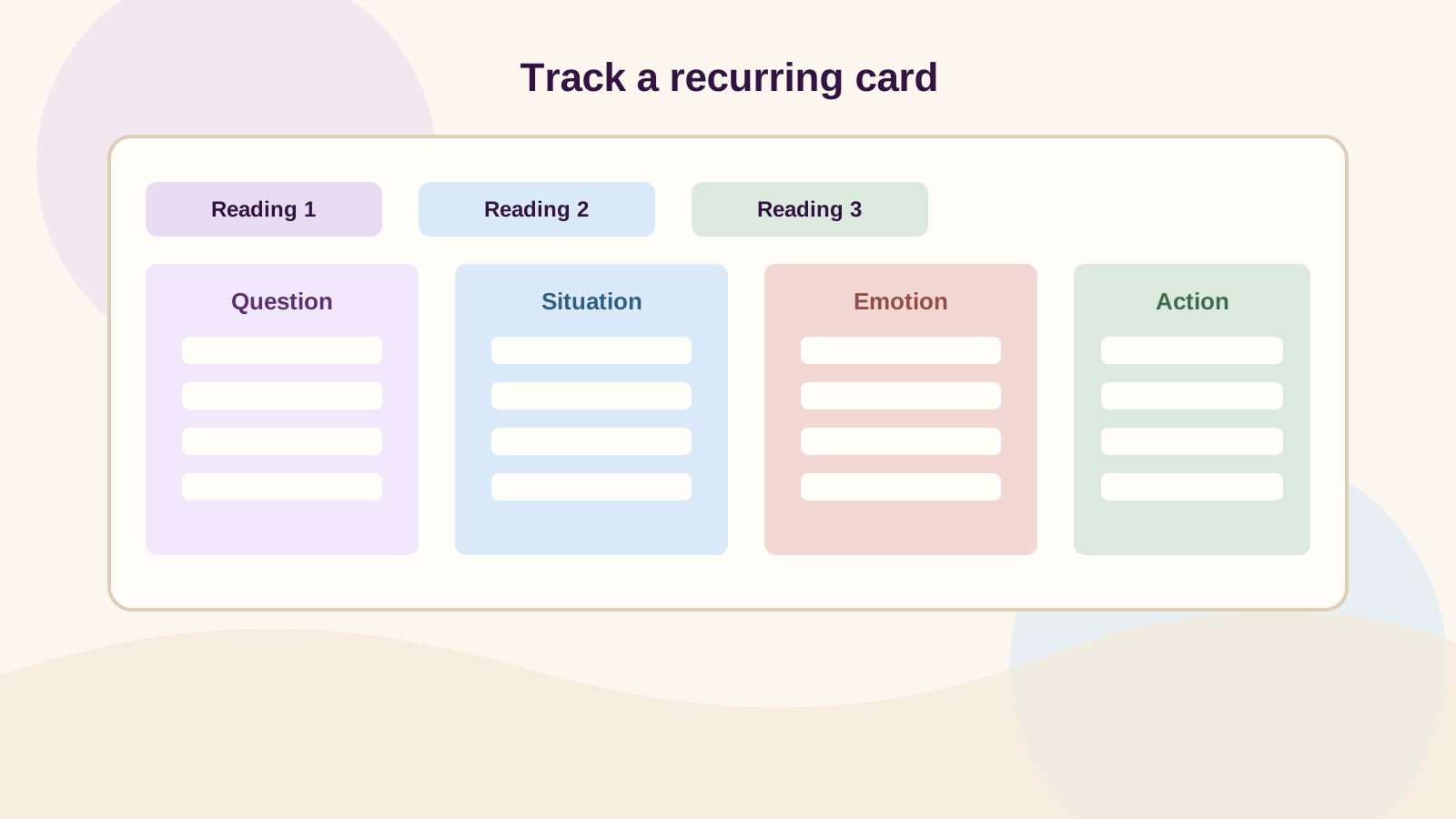
Question
What you asked, in your own words.
Situation
What was actually happening at the time.
Emotion
How you felt during the reading.
Action
What you did or decided afterward.
For a fuller pattern system, see how to track tarot patterns.
Track where a card appears, not just how often it appears, with Fate Mirror history.
Saved readings keep the question, cards, and notes together so repetition can be compared in context.
Explore the JournalExample: The Same Card Across Three Readings
Here is a short case study where the same card appears three times. The card is not more powerful; the context becomes clearer.
Reading 1 (May 2): The Hermit
Question: Should I take a break from dating?
Situation: Just ended a short relationship.
Emotion: Tired, relieved.
Action: Planned one quiet weekend.

Reading 2 (May 18): The Hermit
Question: Why do I keep feeling lonely?
Situation: Busy at work, little social contact.
Emotion: Withdrawn, uncertain.
Action: Called a friend and scheduled a call.

Reading 3 (June 1): The Hermit
Question: What do I actually need right now?
Situation: Realized the loneliness is about time alone, not more company.
Emotion: Calmer, clearer.
Action: Kept two evenings a week for solitude.
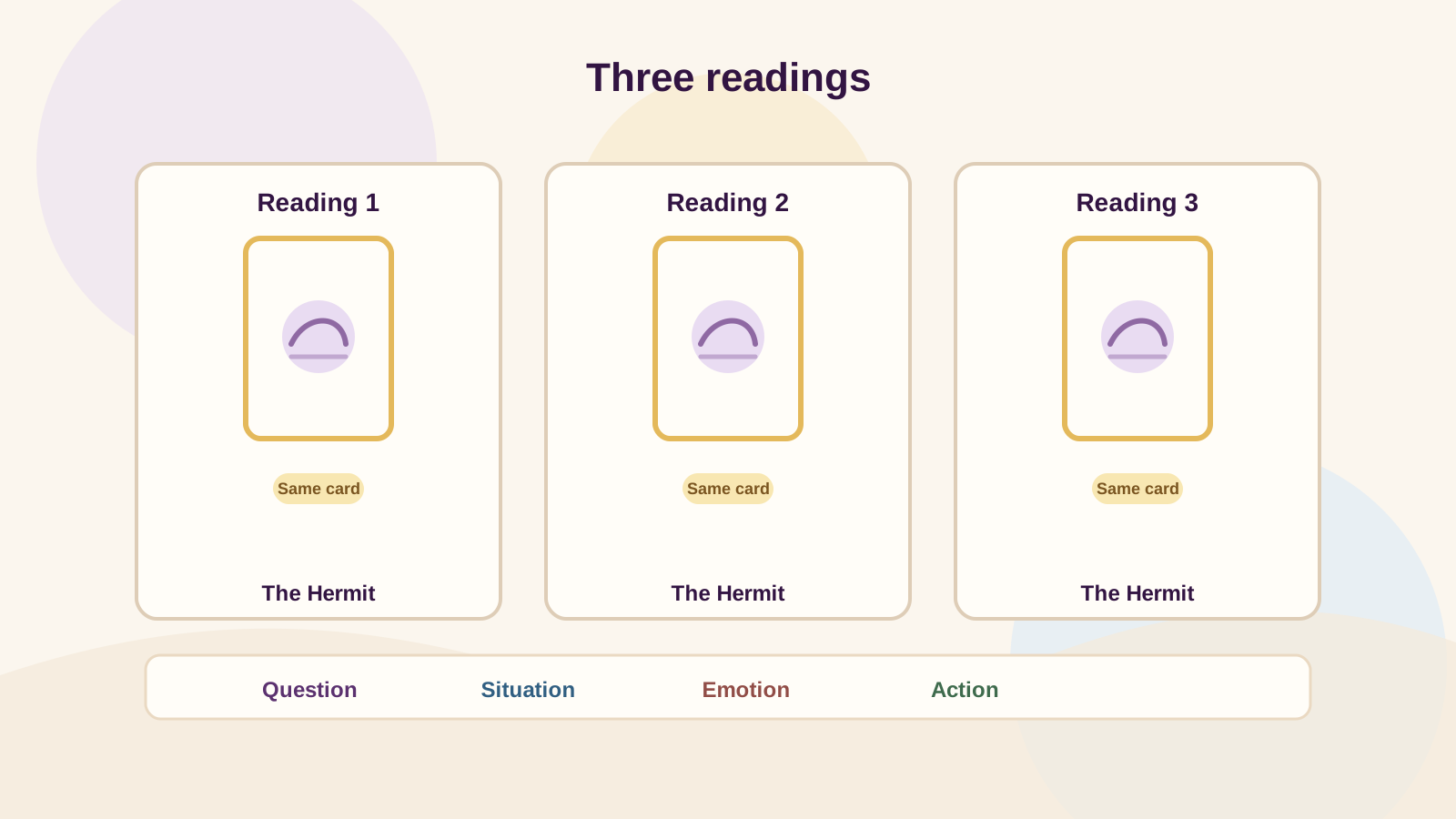
The Hermit kept appearing because the underlying theme changed from burnout to solitude. Without the questions and actions, the repetition would have looked like a warning instead of a shift.
You can read more about The Hermit in the card meanings library.
When to Stop Asking the Same Question
If the same question and the same card keep returning, the pattern is usually the signal, not the card. Pulling again rarely adds clarity.
Stop when you are asking for a different answer instead of more information. Revisit the original notes first; if nothing has changed, the answer is not a new card.
- You already wrote down the first reading.
- The situation has not changed.
- You want the card to say something else.
- You feel more anxious after each pull.
Weekly Mirror is designed to review saved readings and repeated patterns over time. You can see how it fits your history on the Fate Mirror pricing page.
Track where a card appears, not just how often it appears, with Fate Mirror history.
Saved readings keep the question, cards, and notes together so repetition can be compared in context.
Explore the JournalFAQ
Is a repeating card a sign?
It can be a useful signal to compare context, but it is not proof of a cosmic command. Start with the question, situation, emotion, and action before interpreting repetition.
What is a stalker card?
Stalker card is a pop-culture term for a card that keeps appearing. We treat it the same way here: repetition is worth tracking, but the meaning depends on context comparison, not the label.
Why do I keep pulling the same card?
Usually because the underlying question, emotion, or choice is still active. Coincidence is also possible. Compare your notes before assuming the card is trying to tell you something.
Does repetition make a card more important?
No. Repetition makes it worth reviewing. The importance comes from how the card relates to the question and situation across multiple readings.