
Beginner Guides
What Does It Mean When the Same Tarot Suit Keeps Appearing?
A focused guide to suit-level tarot patterns: what Cups, Wands, Swords, and Pentacles mean in context, and how to track them across readings.
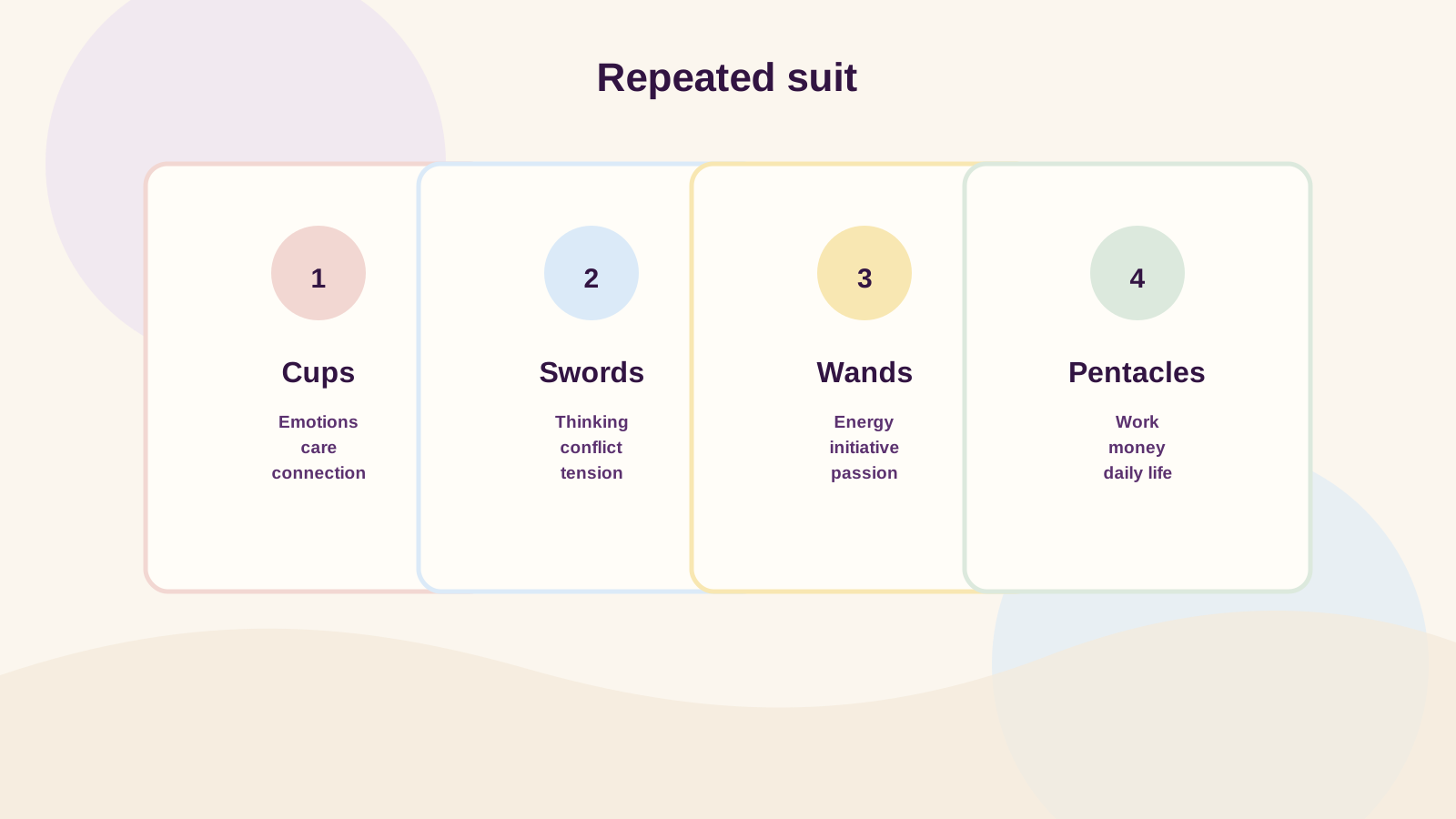
When the same tarot suit keeps appearing, the signal is usually not about one card. It is about the emotional or practical territory those cards keep pointing to. Look at the questions around the readings before deciding what the suit means.
Lots of Cups can point to feelings, care, and emotional connection. Repeated Swords often point to thinking, conflict, or tension. Wands point to energy and initiative. Pentacles point to work, money, and daily life.
This guide treats those themes as context, not a complete dictionary. For deeper card meanings, the Minor Arcana guide is the place to go.
What Does a Repeating Suit Mean?
A repeating suit means the same territory keeps asking for attention. The meaning comes from the questions, situations, emotions, and actions around each reading, not from the suit alone.
If three readings all pull Cups but the questions are about work, money, and friendship, compare what those situations share emotionally before assuming the suit has one message.
Cups Repeating
Lots of Cups usually points to feelings, care, connection, and what needs emotional attention. It does not predict romance; it suggests that emotions are active in the pattern.
Example: one reading asks about a friendship, another about a family decision, and another about self-care. All three show Cups. The shared thread is not the topic but the emotional weight around it.
For individual Cups cards, browse the card meanings for more context.
Swords Repeating
Repeated Swords often point to thinking, conflict, tension, and the stories we tell ourselves. The pattern may be about overthinking, a difficult conversation, or a decision weighed down by fear.
Example: three readings about a job, a relationship, and a health decision all show Swords. The common thread is mental pressure, not the subject.
For individual Swords cards, browse the card meanings for more context.
Compare the questions around a repeating suit in your Fate Mirror history.
Saved readings keep the question, cards, and notes together so suit patterns can be compared in context.
Explore the JournalWands Repeating
Wands show up when energy, passion, initiative, or the urge to move forward is active. Repeated Wands can point to momentum, restlessness, or a desire to start something.
Example: readings about a creative project, a move, and a difficult conversation all show Wands. The shared signal is the need for action, even when the topic differs.
For individual Wands cards, browse the card meanings for more context.
Pentacles Repeating
Pentacles often appear around work, money, health routines, home, and daily responsibilities. Repeated Pentacles can point to practical stability, resources, or the cost of ignoring daily life.
Example: readings about a job change, a budget, and a health habit all show Pentacles. The pattern is about what is practical and sustainable, not about one card.
For individual Pentacles cards, browse the card meanings for more context.
One Reading vs a Long-Term Pattern
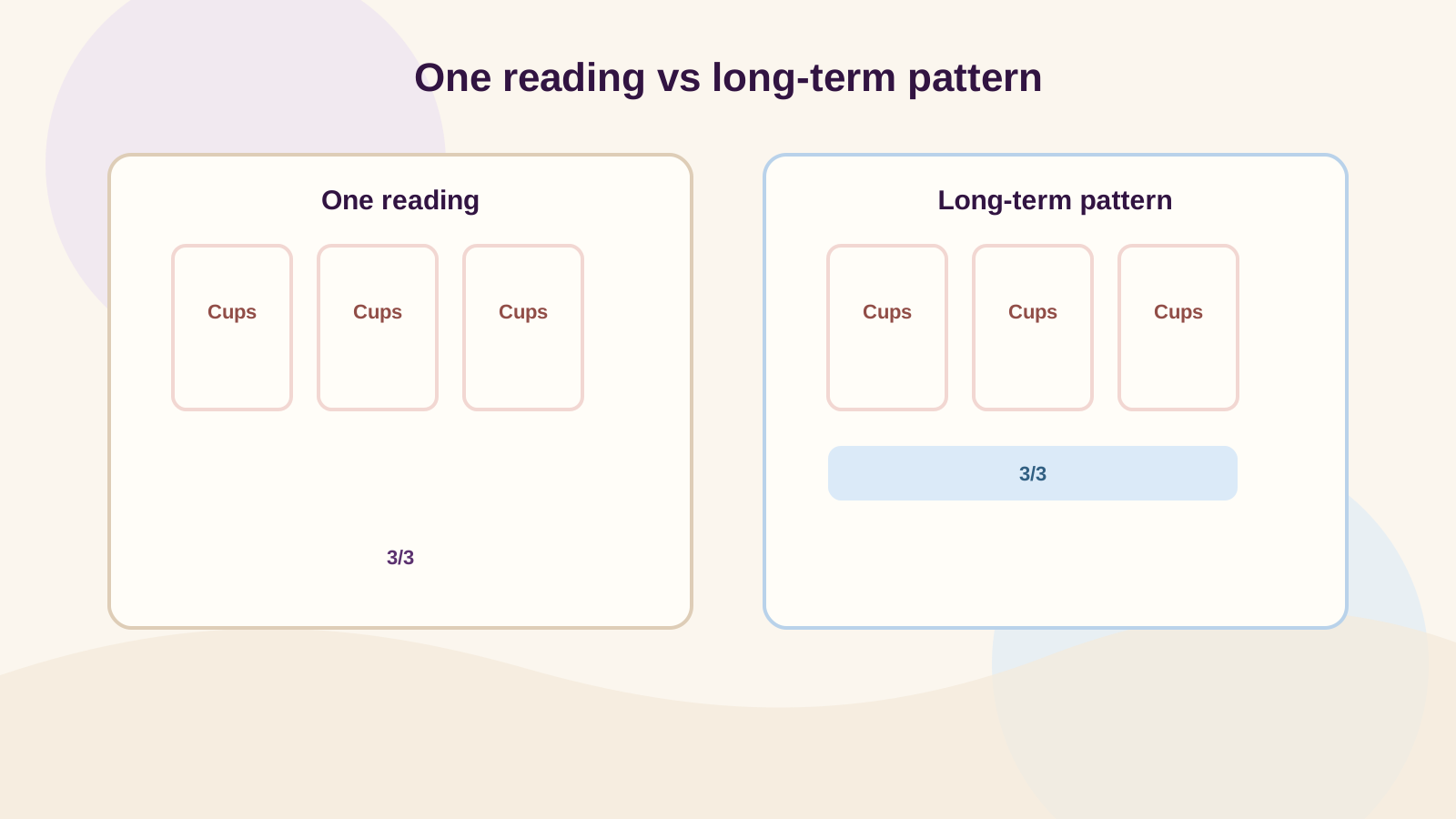
A reading with many Cups is a concentration. The same suit appearing across several readings is a pattern. Concentration tells you what is loud today; a pattern tells you what keeps returning.
If you only see a suit once, treat it as context. If it appears across three or more readings with similar questions, start tracking it.
How to Journal a Repeating Suit
Record the suit, the question, the situation, the emotion, and the action for each appearance. The question is the most important field: these cards appear when you are asking what?
Use the table below as a template. One line per field is enough.
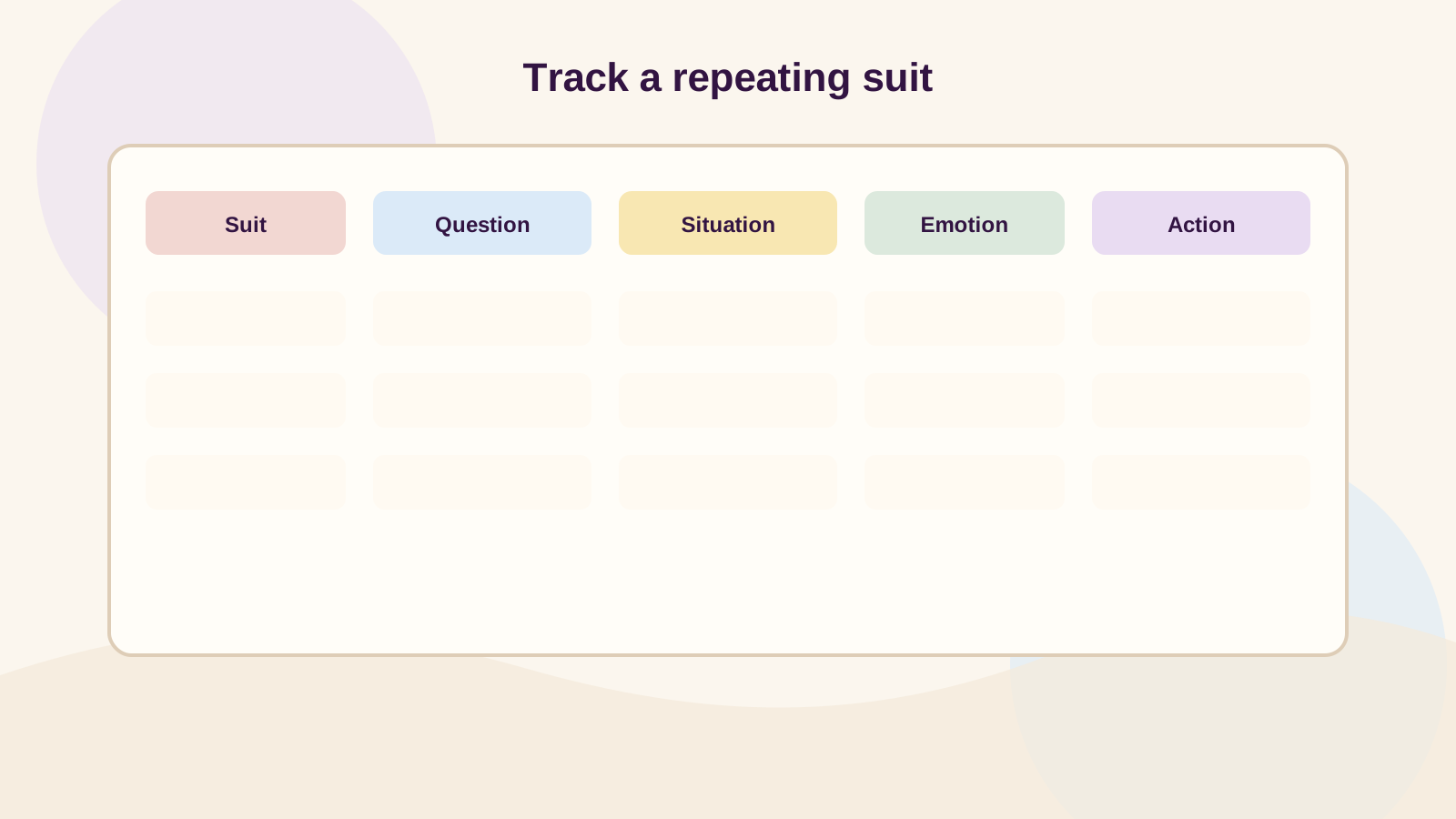
Suit
Cups, Wands, Swords, or Pentacles.
Question
What you asked in your own words.
Situation
What was happening.
Emotion
How you felt.
Action
What you did or decided.
For the broader method, see how to track tarot patterns.
Compare the questions around a repeating suit in your Fate Mirror history.
Saved readings keep the question, cards, and notes together so suit patterns can be compared in context.
Explore the JournalFAQ
What does lots of Cups mean?
Lots of Cups usually points to emotions, care, and connection. The meaning depends on the questions around the reading, not on a fixed prediction.
Why do I keep getting Swords?
Repeated Swords often point to mental tension, conflict, or overthinking. Compare the questions and situations to see what is keeping the mind busy.
Is one dominant suit significant?
A single reading with many cards of one suit is a concentration, not a long-term pattern. It is worth noticing, but not enough to call a theme.
Do reversed cards change a suit pattern?
They can refine it. A reversed Cups card may point to blocked or unexpressed emotion, while a reversed Swords card may point to internal conflict. The suit still shows the territory; the reversal adds nuance. See the Upright vs. Reversed guide for more.