
Beginner Guides
What Is a "Stalker Card" in Tarot—and Should You Be Worried?
A grounded explanation of the community term 'stalker card,' why cards repeat, and how to journal the context without turning repetition into fear.
A stalker card is an informal community term for a tarot card that keeps appearing across readings. It is not a technical tarot rule, and it is not evidence that something bad is following you.
The card is worth noticing because repetition can point to a recurring question, an unresolved choice, or an emotional pattern. The meaning comes from context, not from the label.
For a deeper pattern guide, see repeating tarot cards. This article focuses on the term and how to avoid turning it into fear.
What Is a Stalker Card in Tarot?
A stalker card is a community nickname for a card that keeps showing up. Some readers use it playfully; others treat it as a warning. Neither version is a rule.
The more useful question is not 'why is this card following me?' but 'what is the same question, feeling, or situation around each appearance?'
Should You Be Worried?
No. A repeating card is not evidence that something bad is following you. It is a pattern signal, and patterns are information, not threats.
If the repetition makes you anxious, that feeling is worth journaling too. Anxiety often says more about the question than the card.
Why a Card May Keep Appearing
These four explanations cover most 'stalker card' experiences.
1. Same topic
You keep asking about the same situation, so the deck keeps returning to the same theme.
2. Attention bias
You notice the card because you noticed it before. Other cards also appear; this one gets remembered.
3. Small sample
In a 78-card deck, a few readings are a small sample. Repetition can happen by chance.
4. Unresolved choice
A decision stays open, so the card keeps describing the same fork in the road.
Treat repetition as something to compare, not something to fear.
Saved readings keep the question, cards, and notes together so repetition can be compared in context.
Explore the JournalHow to Journal a Stalker Card
Use this mini-template each time the card appears. The context is more valuable than the count.
Date:
Card:
Question:
First reaction:
Assumption:
Context:
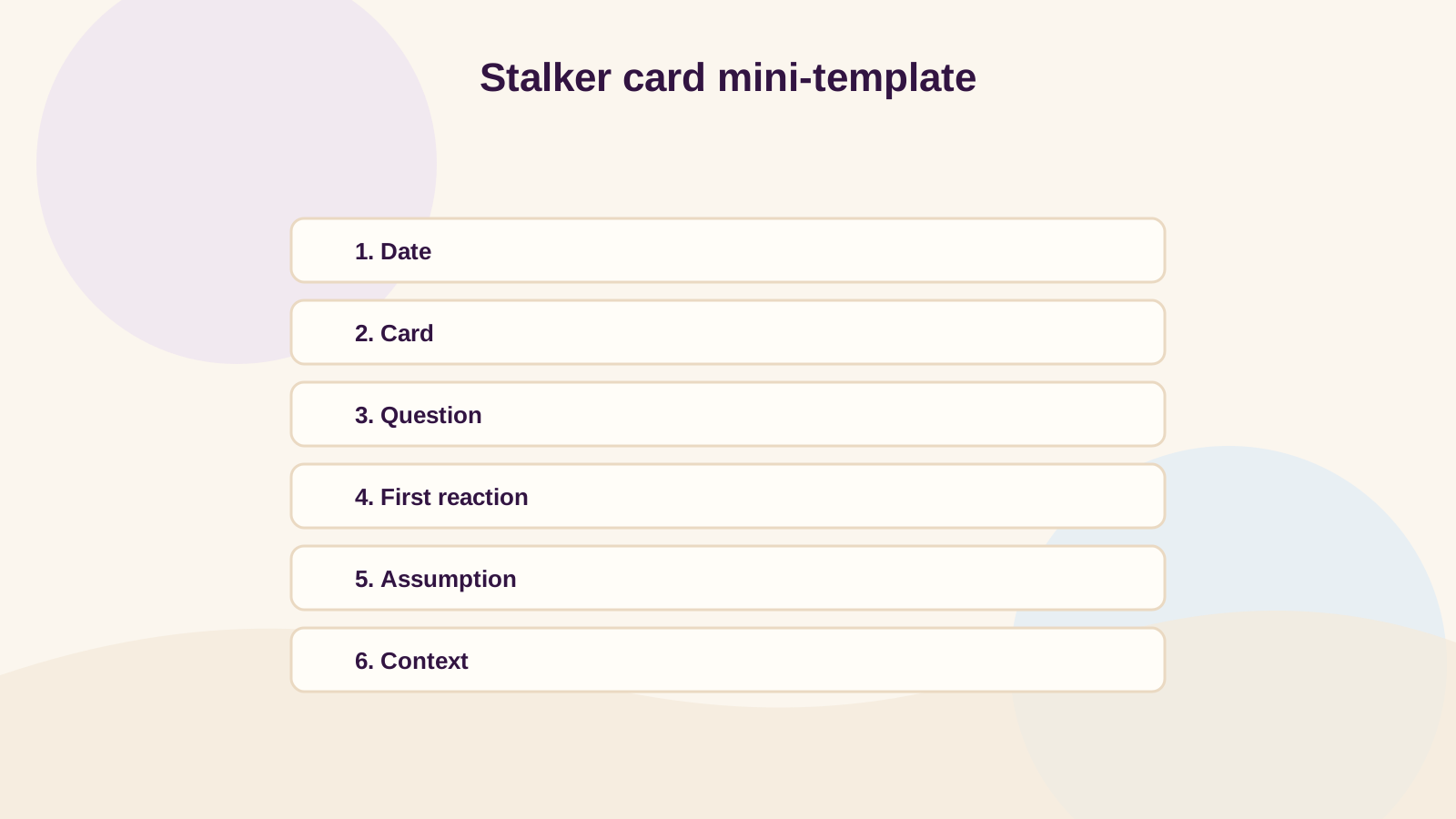
After three or four entries, compare the questions and contexts. If the same question keeps returning, that is the pattern.
When Repetition Becomes Reassurance-Seeking
Pulling the same card and feeling unsettled is different from pulling cards repeatedly until the answer feels comfortable. Reassurance-seeking usually has a tell: you want a different outcome, not more information.
If you feel anxious before drawing or only settle when the card says what you wanted, pause. Read your previous notes first. For a fuller method, see how to track tarot patterns.
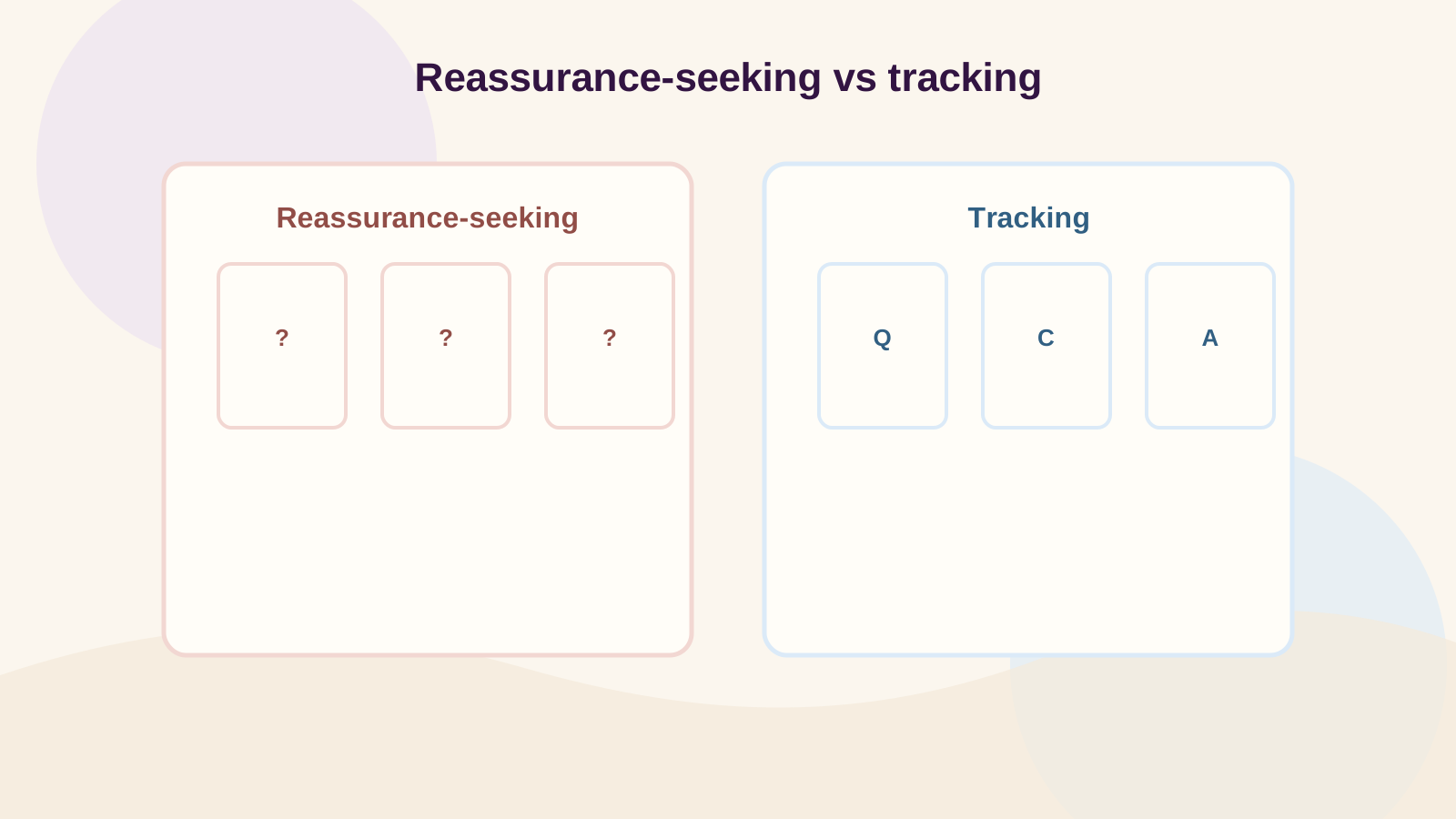
Treat repetition as something to compare, not something to fear.
Saved readings keep the question, cards, and notes together so repetition can be compared in context.
Explore the JournalFAQ
Is a stalker card bad?
No. It is an informal name for a card that keeps appearing. The card is not a threat; the context around each appearance is what matters.
How many times counts?
There is no fixed number. Three appearances with a similar question or context are enough to start comparing. A single repeat is usually not a pattern.
Should I remove the card from the deck?
No. Removing the card hides the pattern instead of helping you understand it. Keep the card and journal the context.
What if the card is reversed?
Note the reversal, but treat it the same way: compare context. A reversed card may show a blocked or internalized version of the same theme.