
Beginner Guides
How to Review Old Tarot Readings Without Rewriting the Past
A grounded method for reviewing old tarot readings: read what you wrote first, add what you know now, and compare questions, cards, assumptions, and actions.
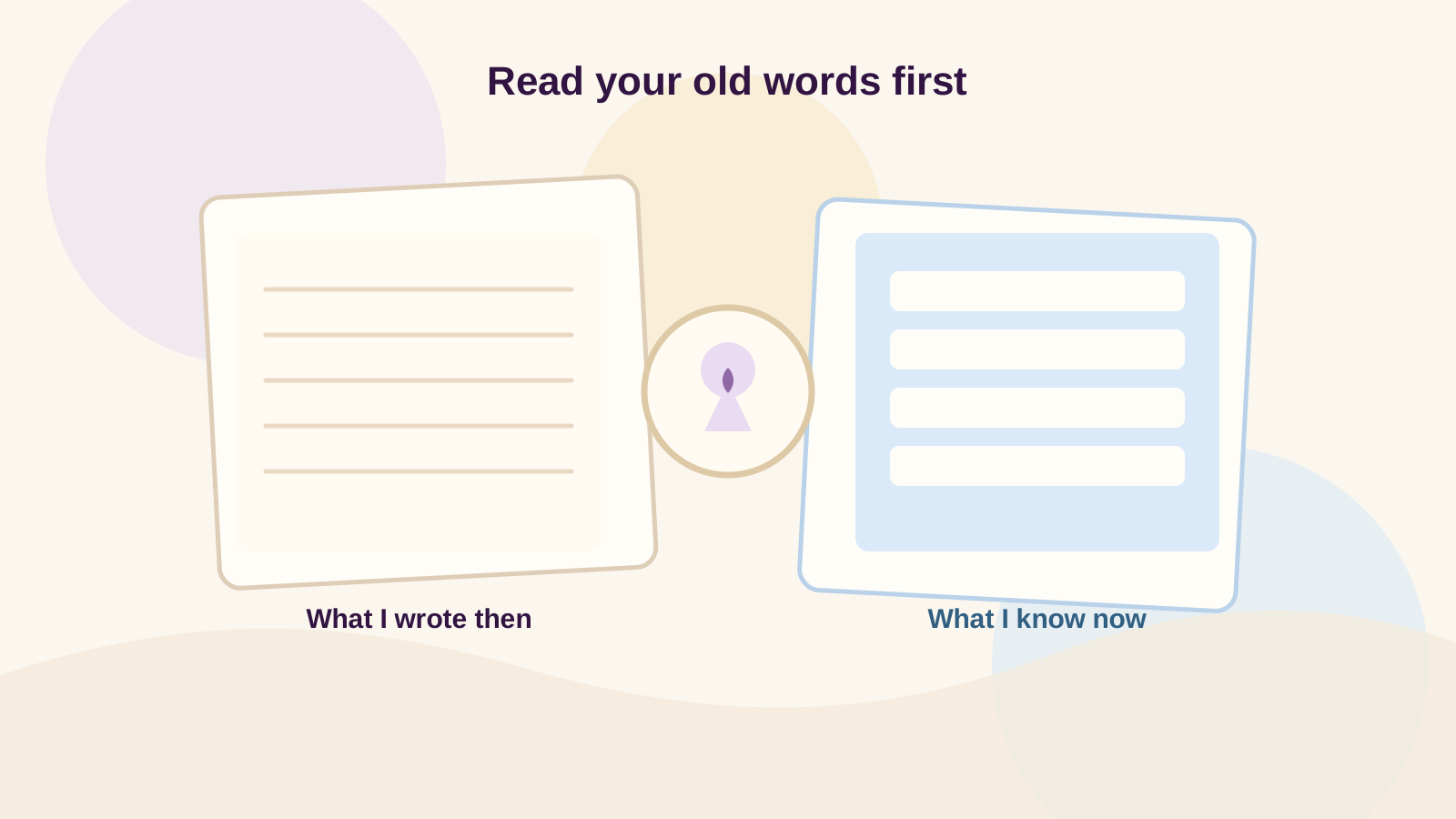
To review an old tarot reading, open your original notes first and read what you actually wrote before adding any new interpretation. Memory rewrites readings through hindsight bias, so the safest review separates What I wrote then from What I know now.
The goal is not to score how accurate the reading was. The goal is to compare context, assumptions, and actions, then notice what changed in you.
This method works in a notebook or in your Journal. The important thing is that the original words stay intact while a new layer is added.
Why Old Readings Change in Our Memory
Hindsight bias is the tendency to remember an old reading as more accurate or more obvious than it felt at the time. The outcome reorganizes the memory of the card.
Example: you draw The Tower before a stressful week. On Sunday the card feels confusing. By Friday, after the week gets hard, you remember it as 'I knew it.' You did not know it on Sunday; the result reshaped the memory.
This is why reviewing from memory alone is unreliable. The original note is the only version of the reading that has not been rewritten.
Read Your Old Words Before Reinterpreting
Open the entry and read the question, cards, first reaction, emotion, assumptions, action, and follow-up exactly as written. Do not add today's context yet.
If you cannot find the original note, write down what you remember and label it as memory. A remembered reading is not the same as a recorded reading.
- Read the original question before looking at the cards again.
- Read your first reaction before checking today's mood.
- Read the assumption before deciding whether it was true.
- Resist the urge to edit the old words.
A Two-Column Review Method
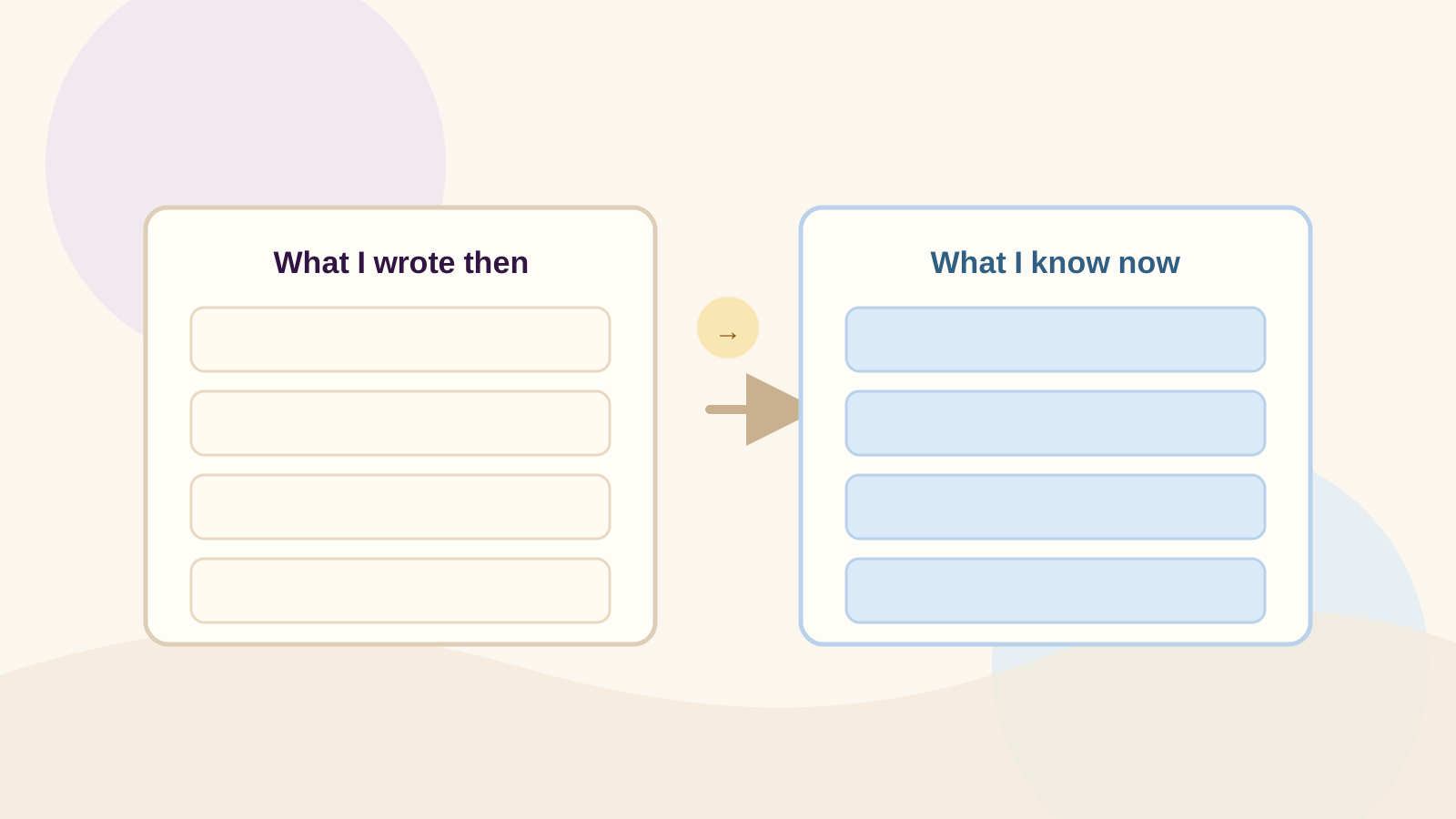
Put What I wrote then on the left and What I know now on the right. The gap between the two is the insight.
Do not move words between columns. If today's understanding belongs in the right column, leave the left column untouched.
Question
Then: 'Why do I keep hesitating before the meeting?' Now: 'The real question was about my fear of conflict.'
Cards
Then: 'Two of Swords, Queen of Cups, Page of Pentacles.' Now: 'I would read the blindfold as avoidance, not balance.'
Assumption
Then: 'I assumed silence means rejection.' Now: 'Silence meant he needed time, not rejection.'
Action
Then: 'Write one sentence before the meeting.' Now: 'I did, and it changed the conversation.'
Keep your original notes intact, then use Fate Mirror history to compare what actually changed.
A private journal that keeps your original words and adds new layers over time.
Explore the JournalMonthly or Quarterly Review Checklist
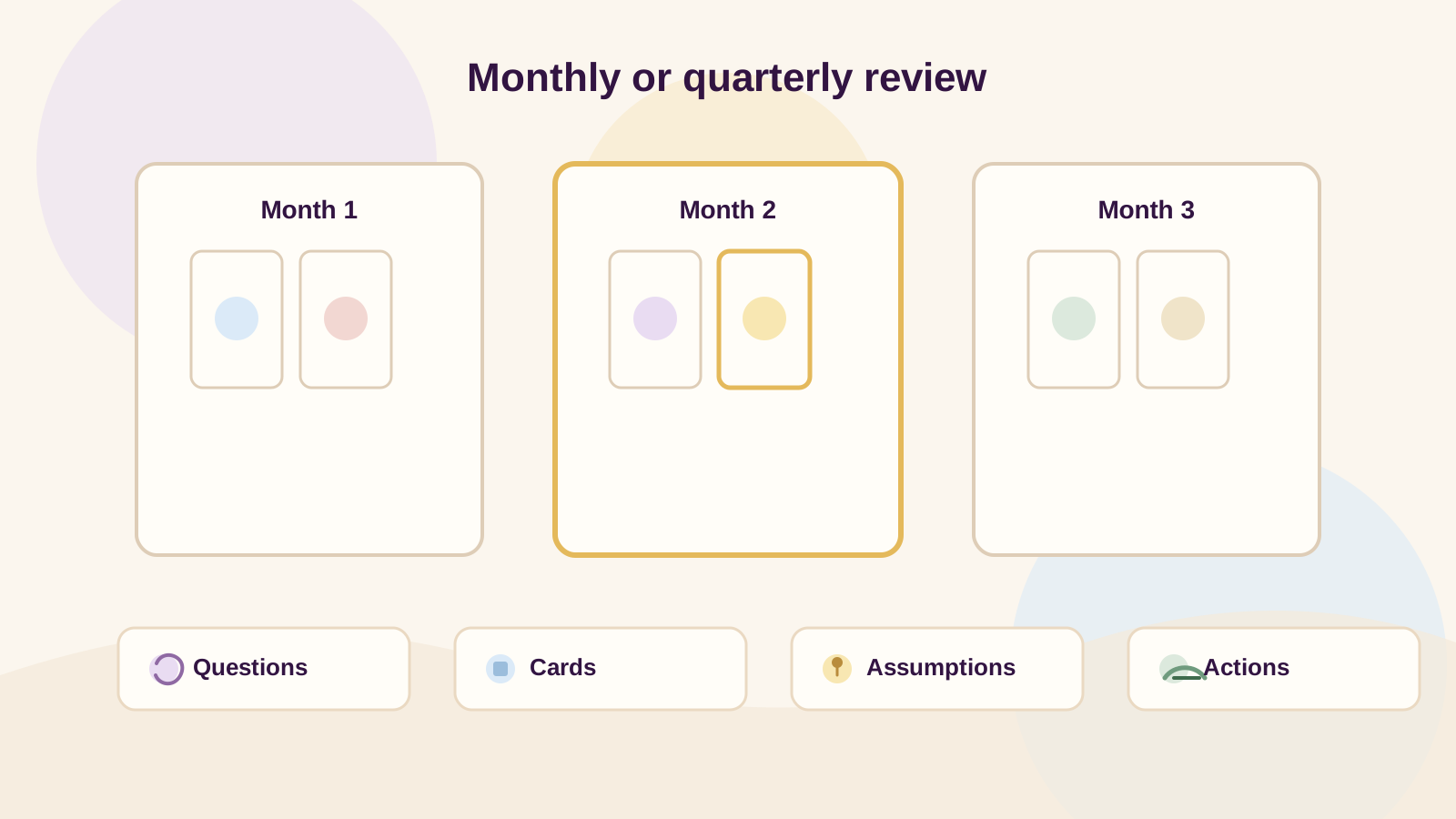
Pick a monthly or quarterly rhythm. A short, regular review is more useful than a dramatic one that never happens.
- Open the saved entries before reading today's notes.
- Read the original question, cards, first reaction, and assumptions first.
- Write What I know now in a separate column.
- Compare repeated questions, cards, assumptions, and actions.
- Notice changes without judging the old reading as right or wrong.
- Save the review as a new layer, not an edit.
Example
Here is a short old reading review that follows the method. Notice how the original note stays untouched.
Original entry (March 12):
Question: Should I take the new role?
Cards: Knight of Wands, Three of Pentacles, Nine of Swords
First reaction: Excited, then anxious about the workload.
Assumption: I assumed I would burn out.
Action: Ask for a clearer scope before deciding.

Review (June 10):
What changed: I took the role after clarifying scope.
What I know now: The anxiety was about unclear expectations, not capacity.
What I would add: My original assumption was useful, but it named fear, not fact.
The old entry does not become wrong. It becomes context for a more accurate understanding.
What Patterns Are Worth Tracking?
Track the dimensions that show movement, not the ones that only measure whether a card 'came true.'
Repeated questions
A question that keeps returning points to an unresolved decision, boundary, or need.
Repeated cards
Context matters more than count; check the situation around each appearance.
Repeated assumptions
The same story you keep adding is often more useful than the cards.
Actions
Notice which next steps you followed and which you avoided.
Shifts
A change in feeling or question is progress even when the cards look similar.
For repeated cards, see repeating tarot cards. For the broader history framework, see why your tarot reading history matters, and for turning saved entries into visible patterns, see how to track tarot patterns.
Keep your original notes intact, then use Fate Mirror history to compare what actually changed.
A private journal that keeps your original words and adds new layers over time.
Explore the JournalFAQ
When should I revisit a tarot reading?
Revisit when the situation changes, when an assumption gets tested, or on a regular monthly or quarterly rhythm. Consistency matters more than urgency.
Should I reinterpret old cards?
Yes, but as a new layer. Read the original words first, then add what you know now in a separate column. Do not erase or rewrite what you originally wrote.
How long should I keep readings?
Keep them as long as they are useful and private. Digital history with backup and export protects old entries; paper entries can be scanned or archived.
What if the reading seemed wrong?
Check the context first: the wording of the question, the emotion at the time, and the assumption you were making. A reading that seemed wrong is often a mismatch between question and expectation, not proof that tarot failed.