
Beginner Guides
Why Your Tarot Reading History Matters More Than One Reading
A grounded guide to building and reviewing tarot reading history, with what to save, a four-week example, and a simple monthly review rhythm.
One reading captures a moment. A reading history reveals what keeps returning. The cards matter less on their own than they do as part of a longer thread of questions, emotions, assumptions, and actions.
A single pull can be shaped by how you feel that day, how you phrase the question, and what you were already expecting to see. That does not make it useless. It means it works best as one data point.
This guide explains what to save, how to compare entries, and how to review old readings without rewriting them.
Why One Reading Is Only a Snapshot
Every reading happens inside a moment. Your mood affects the words you choose, the card you focus on, and the story you tell about it. Read on a calm morning and a tense evening, and you may interpret the same card differently.
Question wording matters too. 'Why do I keep attracting unavailable people?' is a different question from 'What do I need in a relationship?' The first assumes a pattern and invites blame; the second invites information. The cards can only answer the question you actually asked.
Confirmation bias also shows up. If you already believe something, a card with a matching image can feel like proof. Later, memory may tidy the details until the reading sounds clearer than it was. The original notes are the only record that resists that smoothing.
What a Reading History Can Reveal
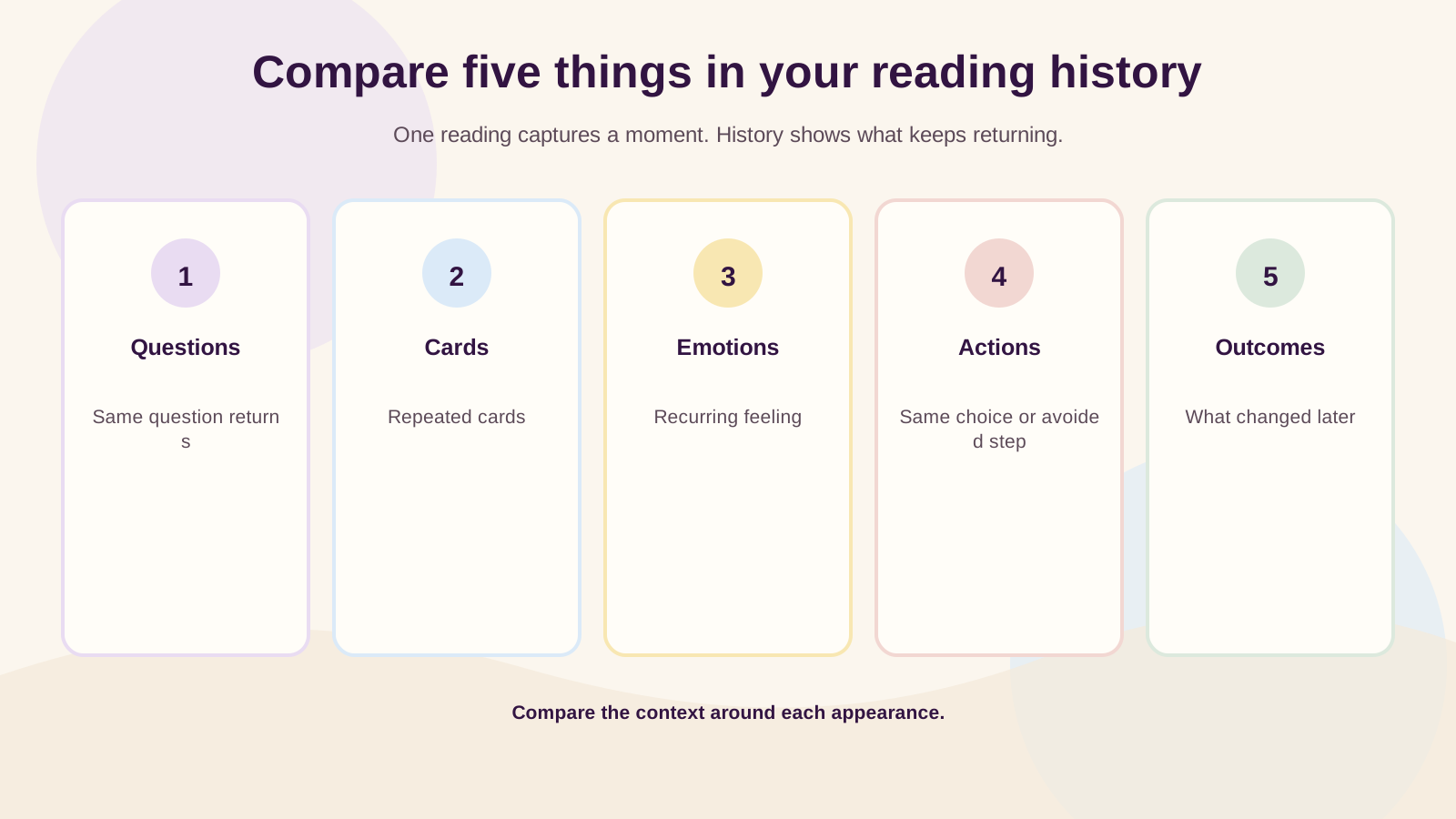
A reading history is useful because it lets you compare five things: the questions you asked, the cards you drew, the emotions around the reading, the actions you took, and what changed later.
One reading can tell you how you feel about a choice today. Five readings can show whether the same assumption keeps returning, whether your actions match your stated intention, and whether the theme is changing.
Questions
The same question in new wording, or a question that gradually becomes more specific.
Cards
Which cards repeat, and whether they appear in similar situations.
Emotions
Feelings before, during, and after the reading.
Actions
What you actually did, including the steps you avoided.
Outcomes
What changed later, noted in one or two lines without rewriting the original entry.
Relationship-related patterns are often visible here too. If connection, distance, boundaries, or communication keep appearing, compare the questions around them before deciding what the pattern means. See relationship patterns for a guided reading built for that comparison.
What to Save Each Time
You do not need a long entry to build a useful history. Six short fields are enough. The point is to record the moment in your own words before hindsight improves it.
Question
Write it exactly as you asked it. If you rephrase later, keep the original wording.
Cards
List the cards in order, including position and reversed orientation if you use one.
First reaction
Your first feeling, image, or thought. Do not edit it for accuracy.
Assumption
What you believed in that moment, even if it later changed.
Action
What you did or decided, including doing nothing.
Follow-up
One line about what changed later. You can add this on review day.
Keeping the original wording is what makes a history trustworthy. Memory tends to turn a tentative reading into a clear one. The Journal keeps the question, cards, and first reaction together so you can compare them later.
Build a searchable history in Fate Mirror and review what keeps returning over time.
Save the exact question, cards, and first reaction, then compare entries when the pattern becomes clearer.
Explore the JournalExample: Four Weeks of Readings
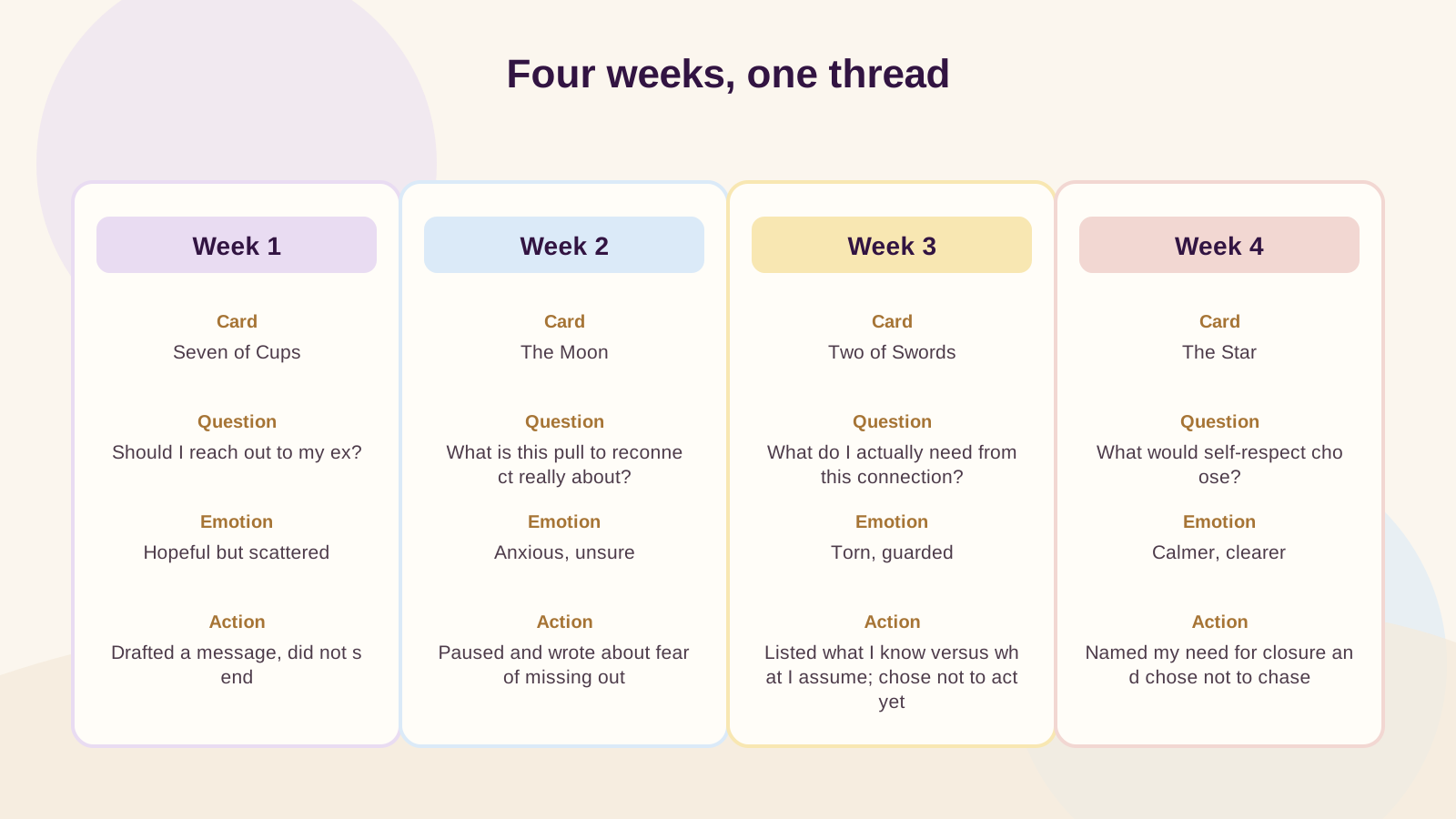
Here is how a short history changes the story. These four entries are invented, but the shape is familiar: the cards stay in the same emotional territory while the question, feeling, and action become clearer.
Week 1
Question: 'Should I reach out to my ex?' Card: Seven of Cups. Emotion: hopeful but scattered. Action: drafted a message, did not send.
Week 2
Question: 'What is this pull to reconnect really about?' Card: The Moon. Emotion: anxious, unsure. Action: paused and wrote about fear of missing out.
Week 3
Question: 'What do I actually need from this connection?' Card: Two of Swords. Emotion: torn, guarded. Action: listed what I know versus what I assume; chose not to act yet.
Week 4
Question: 'What would self-respect choose?' Card: The Star. Emotion: calmer, clearer. Action: named my need for closure and chose not to chase.
The card meanings are not the point of the history. Seven of Cups, The Moon, Two of Swords, and The Star all describe a mind sorting through possibility, uncertainty, choice, and hope. The bigger change is in the question, which moves from 'Will they come back?' to 'What do I need?' That shift is only visible across time.
Tarot cannot verify another person's private feelings or guarantee what will happen. The history can only show your side of the pattern: what you assumed, what you felt, and which actions followed. For card meanings, use the card library.
How Often to Review Your History
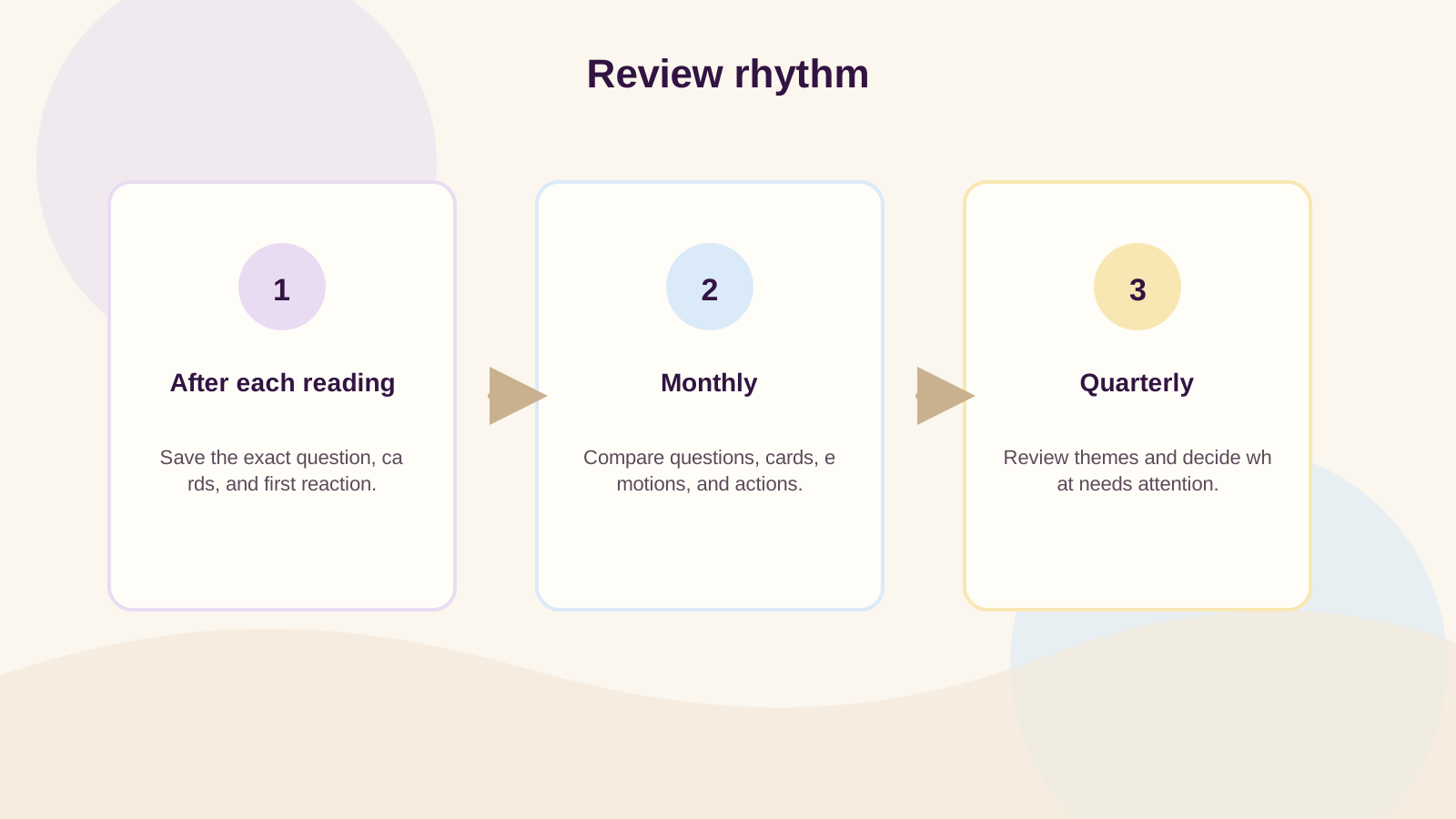
A useful rhythm is: save after each reading, scan monthly, review themes quarterly. Daily rereading of every entry usually adds noise; you need enough entries to see whether something is actually returning.
When you review, read your original notes before adding what you know now. That separation matters. For the full method, see how to review old tarot readings.
What History Cannot Prove
A reading history is for reflection, not for proving prediction accuracy. It cannot confirm what another person is thinking, cannot guarantee a future event, and cannot make a decision for you.
- Other people: a card cannot verify someone else's private thoughts, feelings, or intentions.
- Future outcomes: repetition is not a promise that something will or will not happen.
- Your choices: the history can clarify what you have assumed and done, but the decision still belongs to you.
Use the pattern to sharpen your own observation, assumption, need, boundary, and choice. That is where history earns its place. For a broader method, see how to track tarot patterns.
Build a searchable history in Fate Mirror and review what keeps returning over time.
Save the exact question, cards, and first reaction, then compare entries when the pattern becomes clearer.
Explore the JournalFAQ
How long should I keep tarot readings?
As long as they are useful. There is no expiry date. Even entries that felt wrong later can show what you assumed or hoped in that moment.
Should I save every reading?
Not every card pull needs a full entry. Save readings that carry a real question or decision. Consistency matters more than volume.
Can history show recurring patterns?
Yes. Compare questions, cards, emotions, assumptions, actions, and follow-ups across several readings. A pattern becomes visible when the same signal returns in a similar context.
Does repetition mean prediction?
No. Recurrence is a reflection prompt, not proof of what will happen. Repeated cards can point to an unresolved question or emotional pattern; see repeating tarot cards for more.
How do I review without rewriting the past?
Read the original notes first, write what you know now in a separate column, then compare. For a step-by-step method, see how to review old tarot readings.
Start with the next reading that matters. Write the question exactly, note your first reaction, and leave a line for follow-up. In four weeks, the entry will be one point in a line you can actually read.